Tell us about the job
Takes about a minute. No obligation.
A furnace repair in Carbon County starts with the parts that cycle the most: the burner, the heat exchanger, and the ignition system. Homes in Carbon County, MT run heat about ten months a year, from September through June. That kind of extended runtime concentrates wear on those components specifically, and a contractor who skips them risks misdiagnosing a fault that has been building across many seasons of cycling. Cracks in a heat exchanger or a degraded ignitor rarely announce themselves on the first cold day; they show up after the load has already accumulated.
Half the homes in Carbon County, Montana were built in 1977 or earlier (2020-2024 ACS 5-year). A furnace running in a house that old has likely outlasted at least one parts generation, and what a contractor finds when the unit is opened can shift the job from a straightforward repair to a sourcing problem. Heat exchangers, gas valves, and ignition assemblies for systems of that era are not always in active production, and a contractor working on one needs to know before ordering whether the part the job requires is still made or has to come from remaining stock.
The Parts of a Furnace a Contractor Checks First
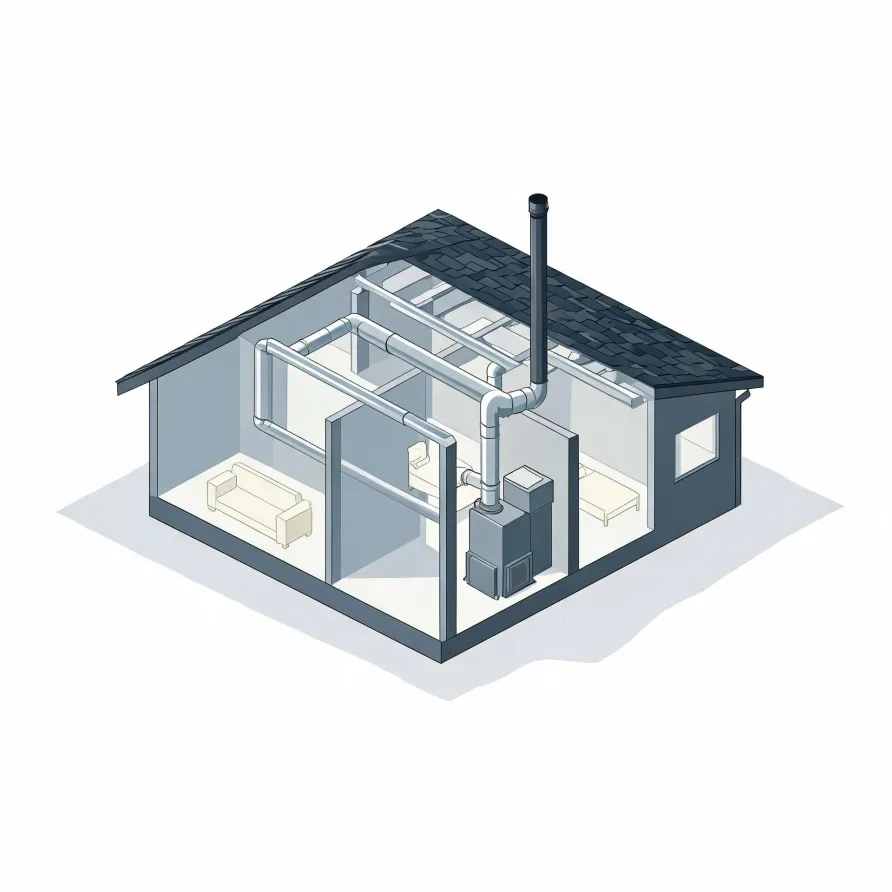
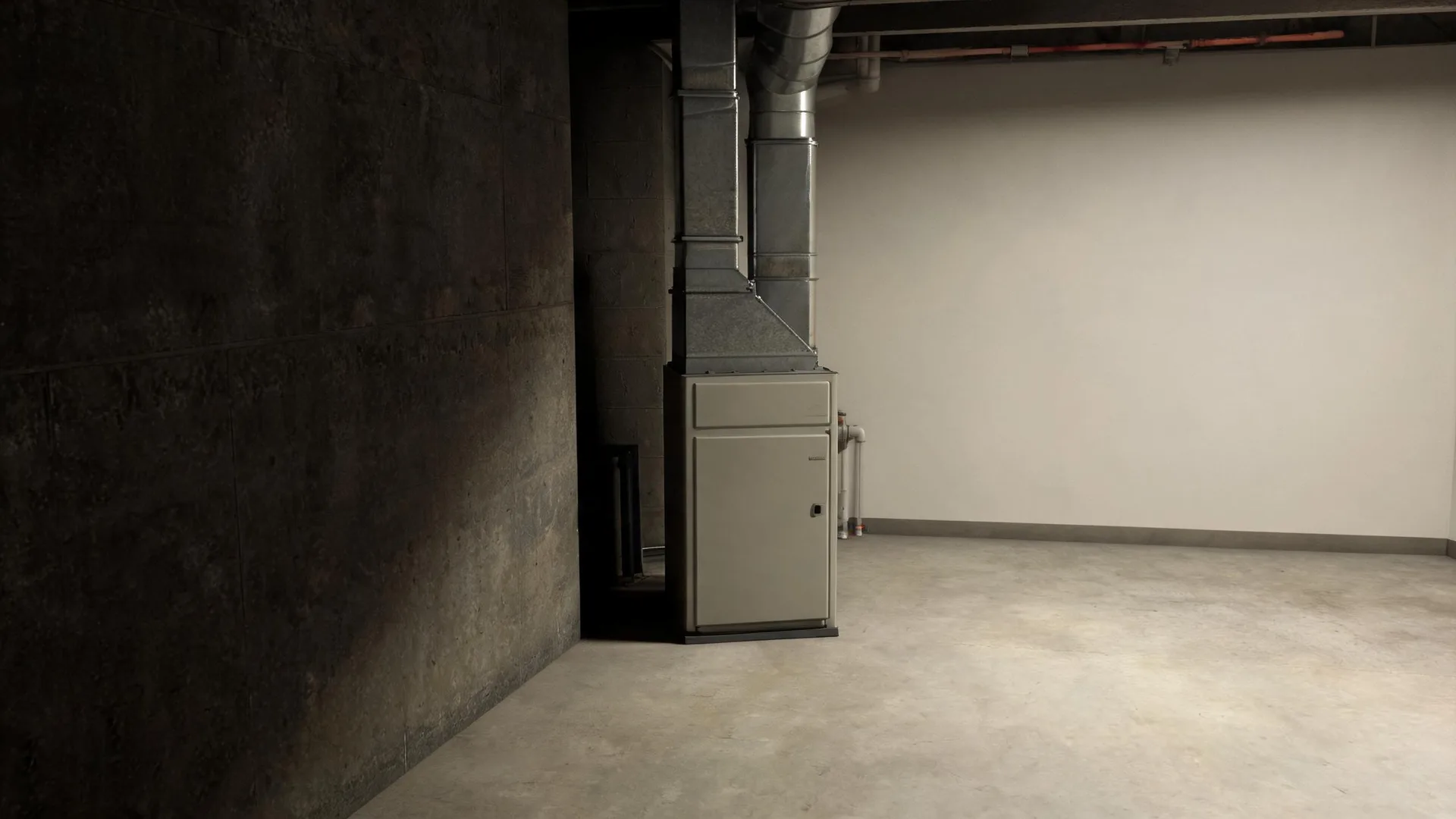
The furnace itself sits in a utility space, basement, or closet and is the unit that generates heat. Inside it, the heat exchanger is the piece a contractor looks at closely when something goes wrong, because cracks or failures there affect both heating performance and air safety. The burners, which fire inside that exchanger, are another early stop when heat output is weak or uneven.
The blower motor sits within the furnace cabinet and pushes conditioned air out through the supply side of the house. Alongside it, the flue or exhaust vent runs from the cabinet up and out of the house, and a contractor checks it when combustion problems or backdrafting are suspected. The thermostat, mounted on a wall in the living space, is where the signal chain starts, so it gets checked when the system fails to respond at all.
The drawing shows a general layout of these components, and a licensed contractor determines which parts apply and what condition they are in for your specific home.
Find a contractor in Carbon CountyCarbon County, Montana, by the numbers
270 severe weather events were recorded in Carbon County, Montana between 2015 and 2024.
NOAA National Centers for Environmental Information, Storm Events Database, bulk CSV export, events 2015-01-01 through 2024-12-31.Half the homes in Carbon County, Montana were built in 1977 or earlier (2020-2024 ACS 5-year).
U.S. Census Bureau, 2020-2024 American Community Survey 5-Year EstimatesCodes & Standards Governing Furnace Repair in Carbon County, Montana6 sourced rules and standards
What happens when a contractor comes out to your home
Non-weatherized gas furnaces manufactured on or after November 19, 2015 must reach 80.0 percent AFUE.
Non-weatherized oil-fired furnaces manufactured on or after November 19, 2015 must reach 83.0 percent AFUE.
Mobile home gas furnaces manufactured on or after November 19, 2015 must reach 80.0 percent AFUE.
Non-weatherized gas furnaces manufactured on or after December 18, 2028 must reach 95.0 percent AFUE, up from the 80.0 percent minimum that applies to units manufactured before that date.
Licensing and Legal Requirements in Carbon County, Montana
Montana’s contractor licence does not reach a casual, minor or inconsequential job whose total price for labour, materials and everything else is less than $2,500 — and the exemption is lost if the work is only part of a larger operation, or if a job is divided up to get under the figure.
Montana requires a current construction contractor licence from the Department of Labor and Industry: an individual or business may not engage in business as a construction contractor without one.
Weather Stress on Heating Equipment in Carbon County
Hard weather puts real load on furnaces. Every pressure swing, cold snap, or power fluctuation a storm brings asks something of the equipment, and how much that adds up over time is a local question that shapes how often repair work comes due in Carbon County.
270 severe weather events, 2015–2024. Source: NOAA National Centers for Environmental Information, Storm Events Database.