Tell us about the job
Takes about a minute. No obligation.
A furnace in Big Horn County spends very little of the year sitting idle, which is where wear on the burner, heat exchanger, and ignition system adds up. Homes in Big Horn County, MT run heat about ten months a year, from September through June. A contractor diagnosing a repair here checks those cycling components first, because they absorb the load of a long heating season in ways that ductwork and filters do not. Ignition failures and heat exchanger fatigue are what repeated thermal cycling produces, and a repair quote that skips a close look at both is working from incomplete information.
Half the homes in Big Horn County, Montana were built in 1976 or earlier (2020-2024 ACS 5-year). A furnace running in stock this old has likely been repaired or swapped at least once, and what a contractor finds once the heat exchanger and burner assembly come apart tells them more than anything visible from the outside. The part that slows a job here is sourcing: components sized for older furnace designs sit at the edge of what distributors still carry, and a repair that looks straightforward on arrival can hinge on whether the right part ships this week or this month.
The Parts of a Furnace a Contractor Checks First
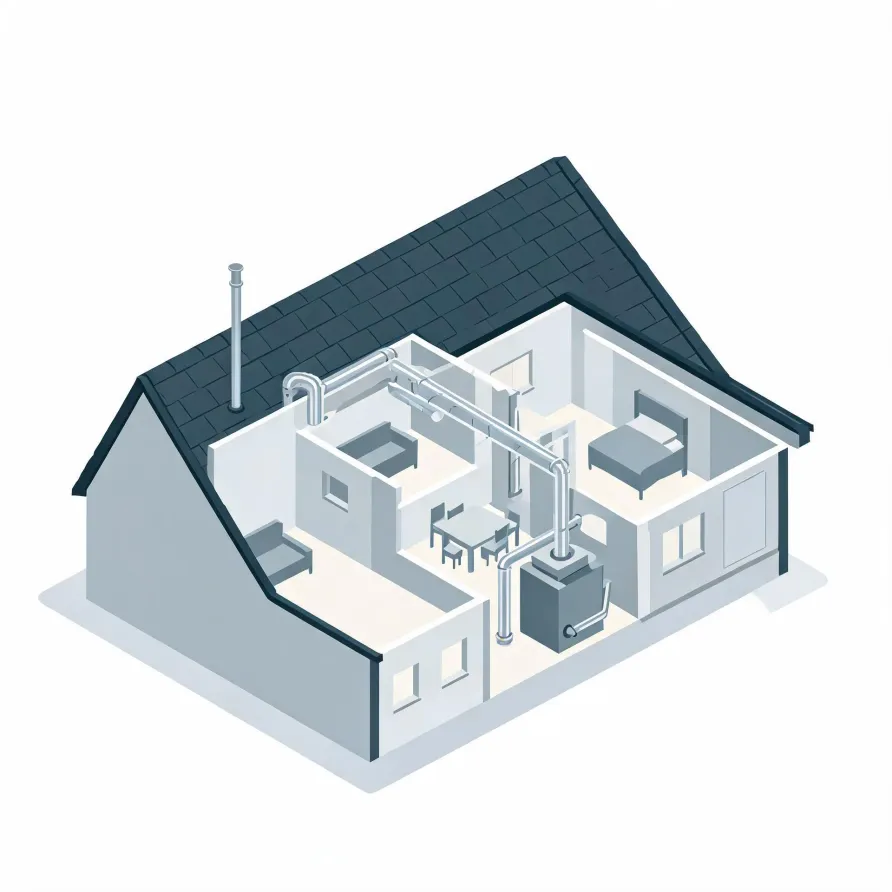
The furnace cabinet sits in the basement, utility room, or closet and is the heart of the system. Inside it, the heat exchanger is the piece a contractor looks at closely during a repair call, because cracks or corrosion there affect both performance and safety. The burner assembly, which sits just below the heat exchanger, is another common starting point when a furnace stops heating or heats unevenly.
The blower motor and its fan wheel sit at the base of the cabinet and push conditioned air into the ducts. Alongside them, the control board reads signals from the thermostat and tells every other component when to act, making it a frequent suspect when the furnace behaves erratically or refuses to start at all.
The drawing shows a general layout of these components, and a licensed contractor determines exactly what applies to the furnace in your home.
Find a contractor in Big Horn CountyBig Horn County, by the numbers
231 severe weather events were recorded in Big Horn County, Montana between 2015 and 2024.
NOAA National Centers for Environmental Information, Storm Events Database, bulk CSV export, events 2015-01-01 through 2024-12-31.Half the homes in Big Horn County, Montana were built in 1976 or earlier (2020-2024 ACS 5-year).
U.S. Census Bureau, 2020-2024 American Community Survey 5-Year EstimatesBig Horn County, Montana holds 4,527 housing units (2020-2024 ACS 5-year).
U.S. Census Bureau, 2020-2024 American Community Survey 5-Year EstimatesOwners occupy 66.7% of the occupied homes in Big Horn County, Montana (2020-2024 ACS 5-year).
U.S. Census Bureau, 2020-2024 American Community Survey 5-Year EstimatesCodes & Standards Governing Furnace Repair in Big Horn County, Montana6 sourced rules and standards
What the repair visit looks like
Non-weatherized gas furnaces manufactured on or after November 19, 2015 must reach 80.0 percent AFUE.
Non-weatherized oil-fired furnaces manufactured on or after November 19, 2015 must reach 83.0 percent AFUE.
Mobile home gas furnaces manufactured on or after November 19, 2015 must reach 80.0 percent AFUE.
Non-weatherized gas furnaces manufactured on or after December 18, 2028 must reach 95.0 percent AFUE, up from the 80.0 percent minimum that applies to units manufactured before that date.
Licensing and Legal Requirements in Big Horn County, Montana
Montana’s contractor licence does not reach a casual, minor or inconsequential job whose total price for labour, materials and everything else is less than $2,500 — and the exemption is lost if the work is only part of a larger operation, or if a job is divided up to get under the figure.
Montana requires a current construction contractor licence from the Department of Labor and Industry: an individual or business may not engage in business as a construction contractor without one.
Severe Weather Events in Big Horn County
Montana's climate puts real stress on heating equipment, and Big Horn County has its own local weather history. How hard a furnace has worked over the years depends on what the weather has demanded of it.
231 severe weather events, 2015–2024. Source: NOAA National Centers for Environmental Information, Storm Events Database.