Tell us about the job
Takes about a minute. No obligation.
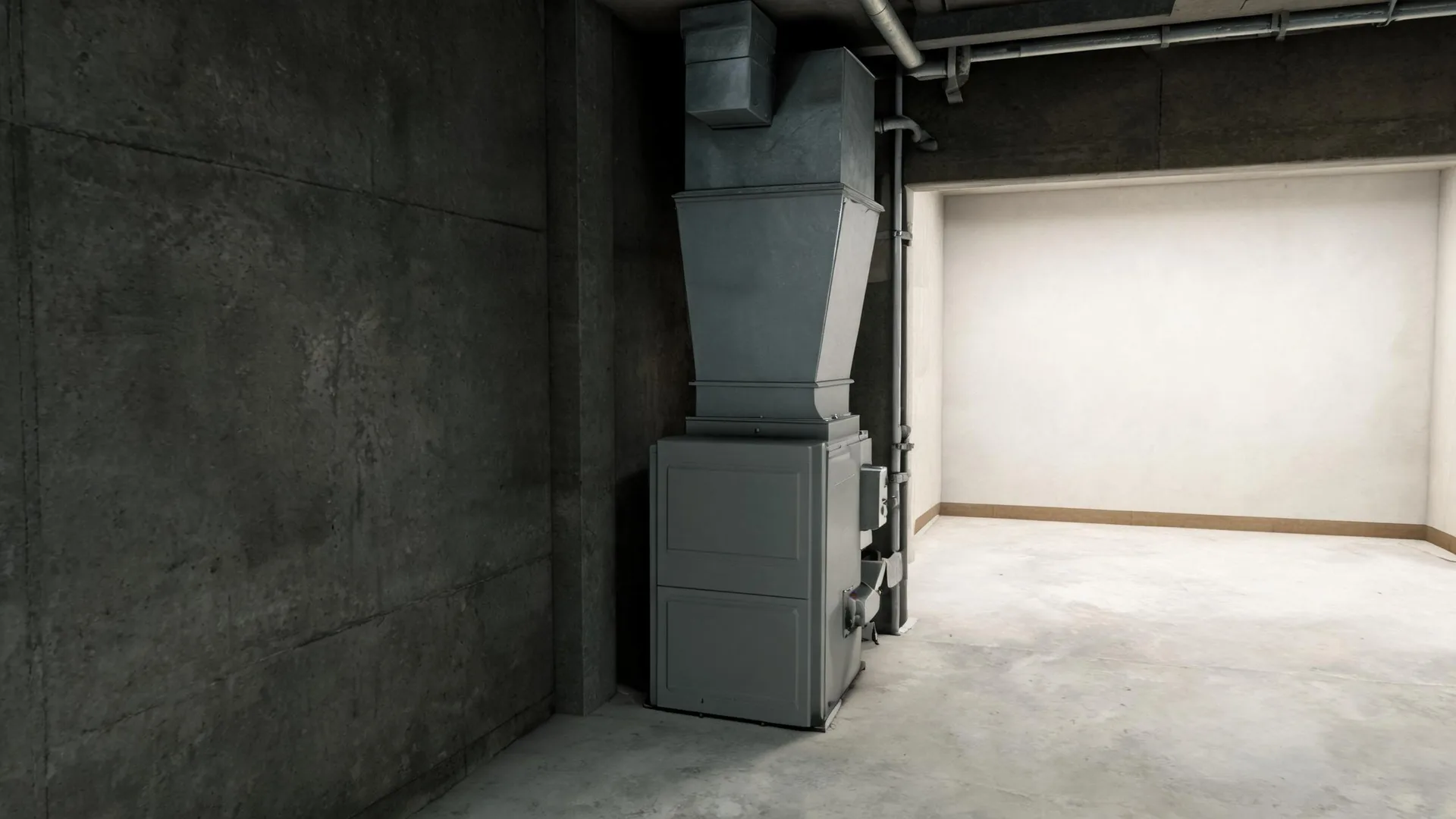
A furnace repair in Dawson County starts with a question a contractor has to settle before they price anything: how much of what they are finding is fatigue from accumulated runtime, and how much is a discrete failure they can actually fix. Homes in Dawson County, MT run heat about nine months a year, from September through May. The burner cycles and the heat exchanger flexes with every one of those cycles, and by the time a furnace shows a fault, those components carry real history. A contractor who skips that read risks replacing a part that was never the problem.
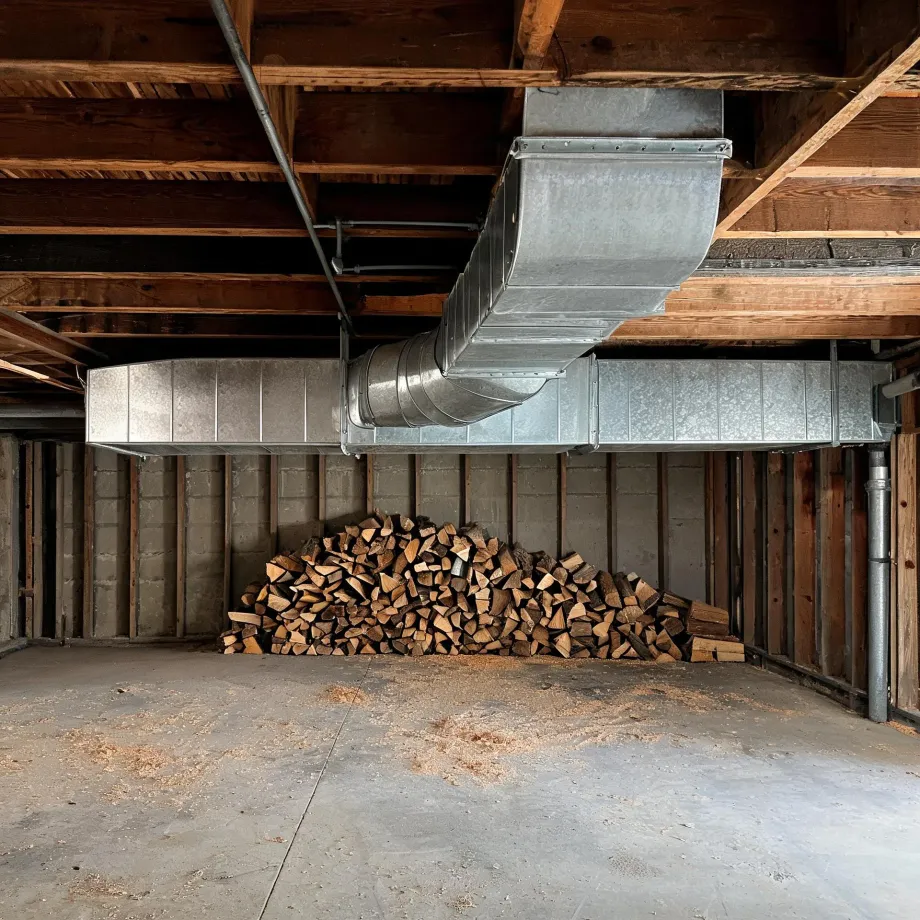
Ductwork laid in for one system and pressed into service for another tends to carry the history of both. Half the homes in Dawson County, Montana were built in 1966 or earlier (2020-2024 ACS 5-year). That span means many furnaces here are working against duct runs that have shifted, separated at joints, or narrowed from accumulated debris in ways that alter static pressure across the whole system. When a contractor opens a furnace in Dawson County, what they find inside is only part of the repair picture. The duct side of the diagnosis changes what the fix actually is.
The Parts of a Furnace a Contractor Checks First
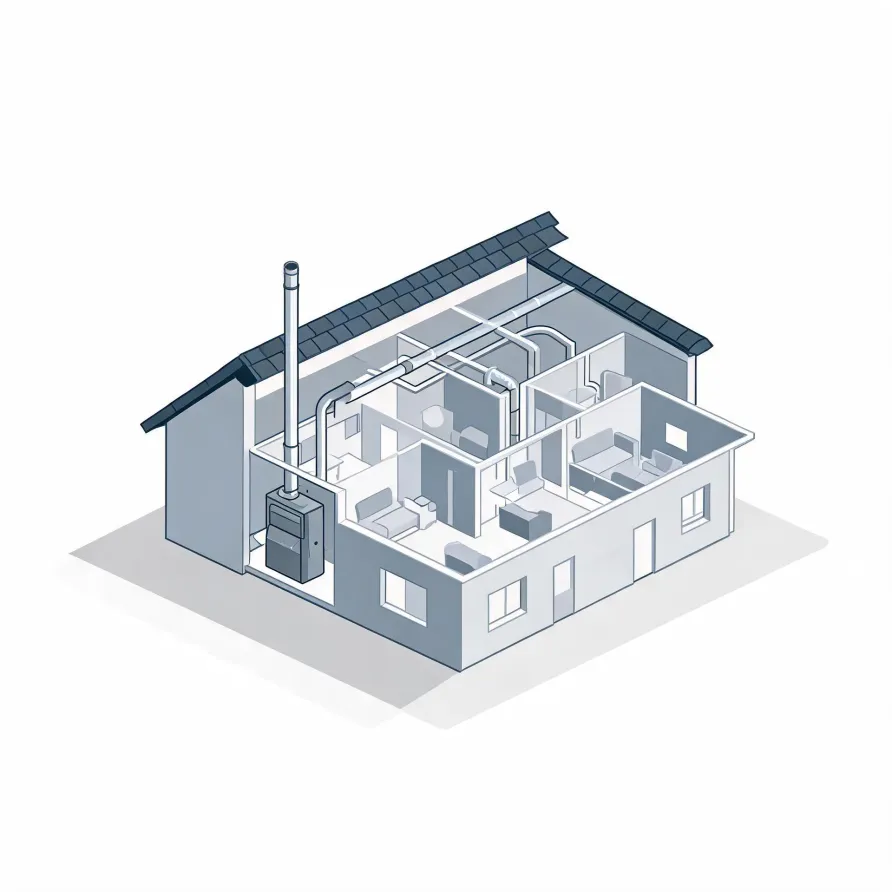
The heat exchanger sits at the core of the furnace cabinet, and it is usually the first place a contractor looks when a furnace is blowing air that should be warmer. The burner assembly sits just below it and is where the flame is produced. When either piece is off, the whole system feels it.
The blower motor and its fan wheel sit lower in the cabinet and push conditioned air out through the supply side of the house. The flue pipe runs from the top of the furnace up and out, carrying combustion gases away. The control board ties these pieces together, and a fault there can send the wrong signal to any one of them.
The drawing shows a typical furnace layout, and a licensed contractor determines what applies to the specific equipment and configuration in your home.
Find a contractor in Dawson CountyDawson County, by the numbers
208 severe weather events were recorded in Dawson County, Montana between 2015 and 2024.
NOAA National Centers for Environmental Information, Storm Events Database, bulk CSV export, events 2015-01-01 through 2024-12-31.Half the homes in Dawson County, Montana were built in 1966 or earlier (2020-2024 ACS 5-year).
U.S. Census Bureau, 2020-2024 American Community Survey 5-Year EstimatesDawson County, Montana holds 4,381 housing units (2020-2024 ACS 5-year).
U.S. Census Bureau, 2020-2024 American Community Survey 5-Year EstimatesOwners occupy 71.9% of the occupied homes in Dawson County, Montana (2020-2024 ACS 5-year).
U.S. Census Bureau, 2020-2024 American Community Survey 5-Year EstimatesCodes & Standards Governing Furnace Repair in Dawson County, Montana6 sourced rules and standards
What HVAC Repair Looks Like in Dawson County
Non-weatherized gas furnaces manufactured on or after November 19, 2015 must reach 80.0 percent AFUE.
Non-weatherized oil-fired furnaces manufactured on or after November 19, 2015 must reach 83.0 percent AFUE.
Mobile home gas furnaces manufactured on or after November 19, 2015 must reach 80.0 percent AFUE.
Non-weatherized gas furnaces manufactured on or after December 18, 2028 must reach 95.0 percent AFUE, up from the 80.0 percent minimum that applies to units manufactured before that date.
Licensing and Legal Requirements in Dawson County, Montana
Montana’s contractor licence does not reach a casual, minor or inconsequential job whose total price for labour, materials and everything else is less than $2,500 — and the exemption is lost if the work is only part of a larger operation, or if a job is divided up to get under the figure.
Montana requires a current construction contractor licence from the Department of Labor and Industry: an individual or business may not engage in business as a construction contractor without one.
Severe Weather Events in Dawson County
Extreme weather puts real strain on furnace components, and Dawson County's climate is not mild. A furnace working hard against the conditions outside wears faster and fails sooner, which is why local repair demand tracks closely with what the weather delivers.
208 severe weather events, 2015–2024. Source: NOAA National Centers for Environmental Information, Storm Events Database.