Tell us about the job
Takes about a minute. No obligation.
Sizing a furnace for this house is not a generic calculation. Homes in Dawson County, MT run heat about nine months a year, from September through May. A burner and heat exchanger that cycle through a season of that length accumulate stress on the ignition system and heat exchanger surfaces in a way a mismatched unit accelerates badly. A contractor has to establish the actual heating load of the house before quoting, because a unit that runs short of capacity here works harder and longer every cycle, and the parts that carry the combustion load reflect that.
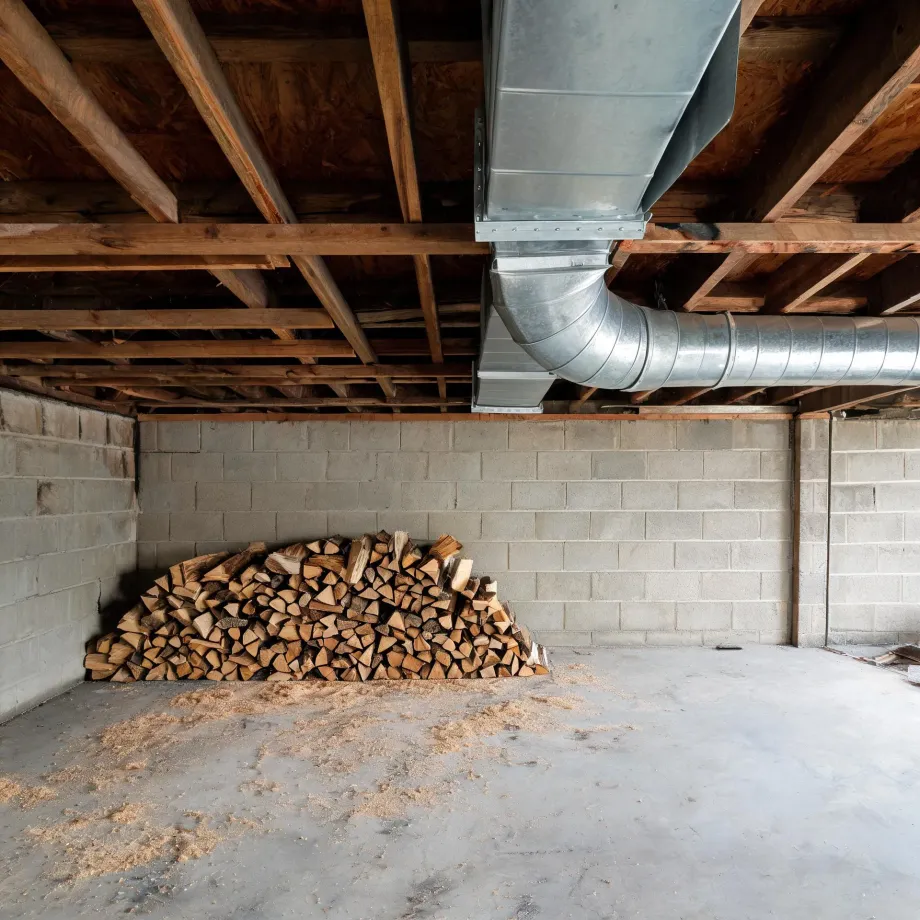
Ductwork laid down for an original heating plant was sized, routed, and connected for that plant. Half the homes in Dawson County, Montana were built in 1966 or earlier (2020-2024 ACS 5-year). A contractor installing a new furnace in a house from that era will open the supply and return runs to find out whether they can carry the airflow the new unit requires, and often they cannot without modification. The electrical service gets the same check. Those two questions, answered by what is physically in the house, are what drive the scope of the job.
What Gets Installed With a New Furnace
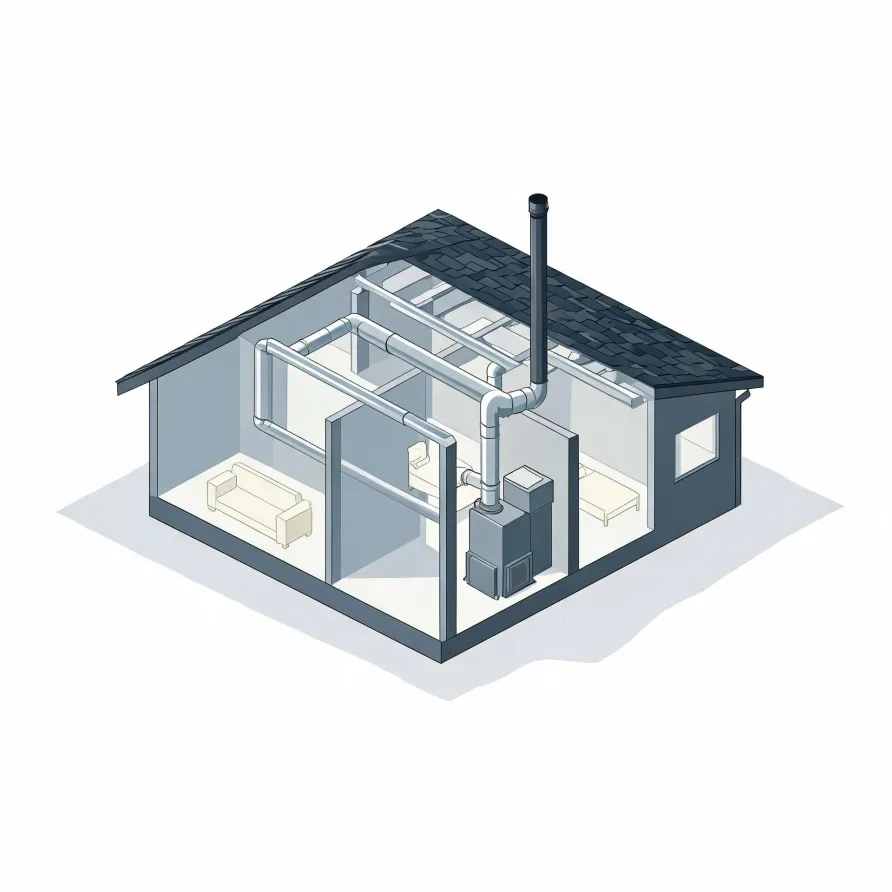
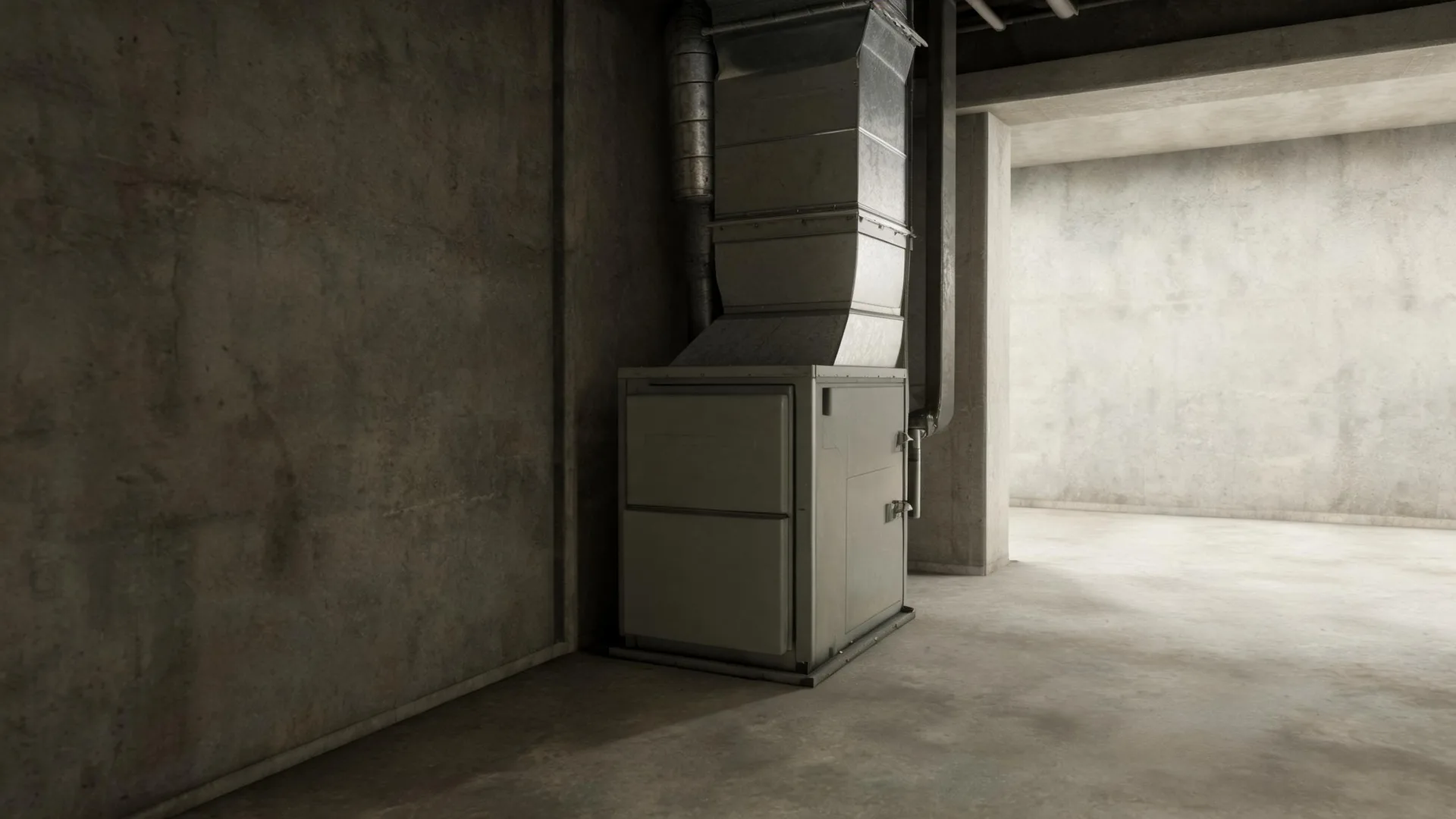
The furnace itself sits in a mechanical room, basement, or utility closet and is the unit that produces heat. A heat exchanger inside it warms the air that moves through your home, while a burner assembly feeds it fuel. The flue pipe runs from the furnace to an exterior wall or roof, carrying combustion gases out.
The air handler connects to the furnace and pushes conditioned air into the duct system. A filter housing mounts where return air enters the unit, and a thermostat goes on an interior wall to give the homeowner control over when the furnace runs and at what temperature.
The drawing shows a typical layout, and a licensed contractor determines exactly what applies to your home.
Find a contractor in Dawson CountyDawson County by the Numbers
208 severe weather events were recorded in Dawson County, Montana between 2015 and 2024.
NOAA National Centers for Environmental Information, Storm Events Database, bulk CSV export, events 2015-01-01 through 2024-12-31.Half the homes in Dawson County, Montana were built in 1966 or earlier (2020-2024 ACS 5-year).
U.S. Census Bureau, 2020-2024 American Community Survey 5-Year EstimatesDawson County, Montana holds 4,381 housing units (2020-2024 ACS 5-year).
U.S. Census Bureau, 2020-2024 American Community Survey 5-Year EstimatesOwners occupy 71.9% of the occupied homes in Dawson County, Montana (2020-2024 ACS 5-year).
U.S. Census Bureau, 2020-2024 American Community Survey 5-Year EstimatesFurnace Installation Rules for Dawson County, Montana6 codes, standards, and laws
What the Installation Actually Looks Like
Non-weatherized gas furnaces manufactured on or after November 19, 2015 must reach 80.0 percent AFUE.
Non-weatherized oil-fired furnaces manufactured on or after November 19, 2015 must reach 83.0 percent AFUE.
Mobile home gas furnaces manufactured on or after November 19, 2015 must reach 80.0 percent AFUE.
Non-weatherized gas furnaces manufactured on or after December 18, 2028 must reach 95.0 percent AFUE, up from the 80.0 percent minimum that applies to units manufactured before that date.
Licensing and Legal Requirements in Dawson County, Montana
Montana’s contractor licence does not reach a casual, minor or inconsequential job whose total price for labour, materials and everything else is less than $2,500 — and the exemption is lost if the work is only part of a larger operation, or if a job is divided up to get under the figure.
Montana requires a current construction contractor licence from the Department of Labor and Industry: an individual or business may not engage in business as a construction contractor without one.
Severe Weather Events in Dawson County
Montana weather puts real demands on heating equipment, and Dawson County conditions shape how hard a furnace has to work and for how long. A contractor sizing or installing equipment here needs to account for what the local climate actually delivers.
208 severe weather events, 2015–2024. Source: NOAA National Centers for Environmental Information, Storm Events Database.