Tell us about the job
Takes about a minute. No obligation.
A furnace installation in Lake County starts with what the contractor finds before the new unit arrives. Homes in Lake County, MT run heat about ten months a year, from September through June. That kind of cycling loads the heat exchanger, the burner, and the ignition system hard, and a house that has run heat that long will often show it in the ductwork, the flue connections, and the framing around the plenum. A contractor who quotes without checking those has not sized the job, only the box.
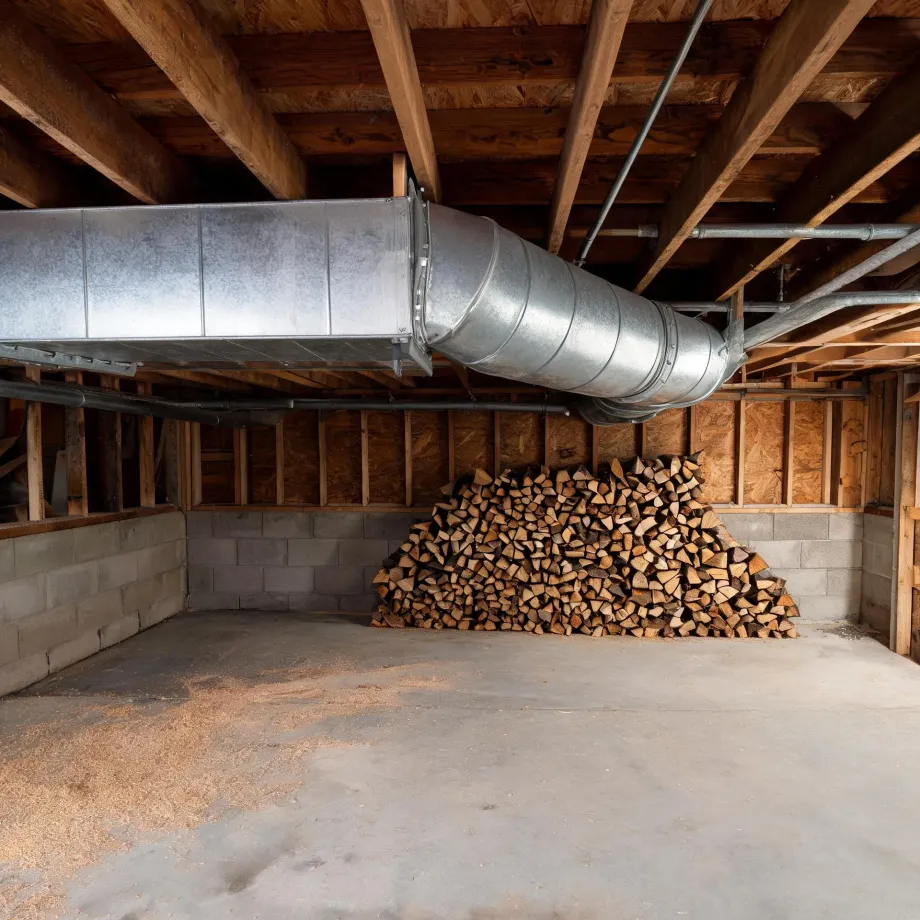
Ductwork routed for an older furnace carries assumptions about static pressure and airflow that a new unit may not match. Half the homes in Lake County, Montana were built in 1986 or earlier (2020-2024 ACS 5-year). A contractor scoping a furnace installation in stock like this checks whether the existing trunk lines and branch runs can carry the new system's output before anything else is quoted, because a mismatch there drives more of the job than the unit selection does. The electrical question is usually simpler. What takes time is the ductwork.
What Gets Installed With a New Furnace
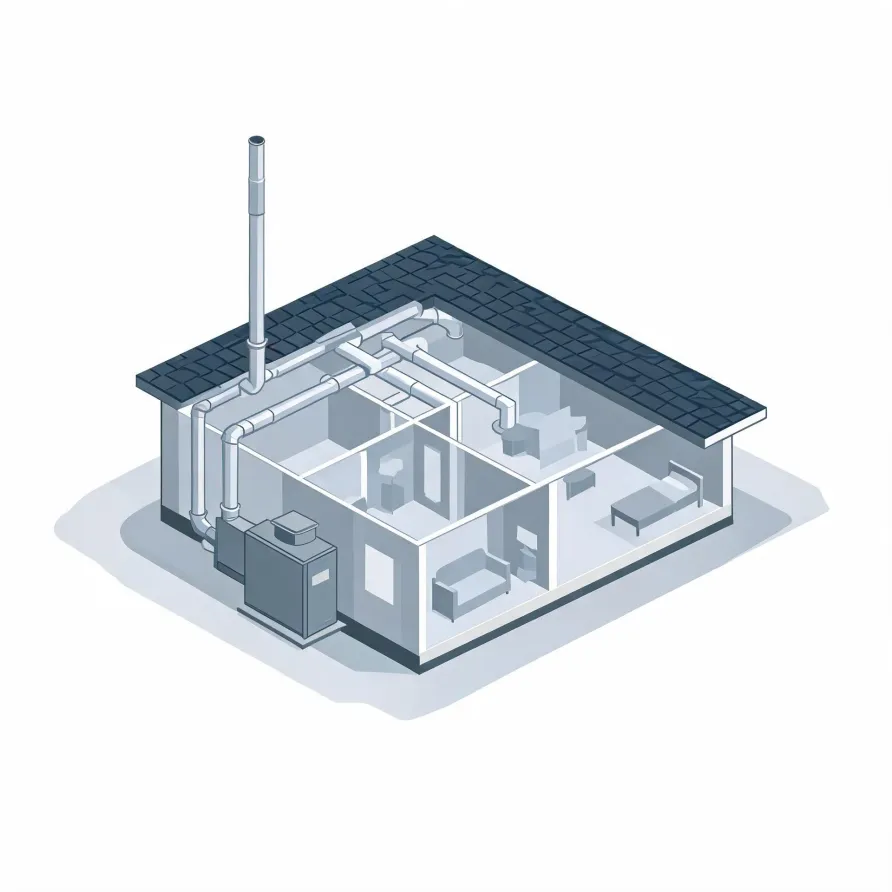
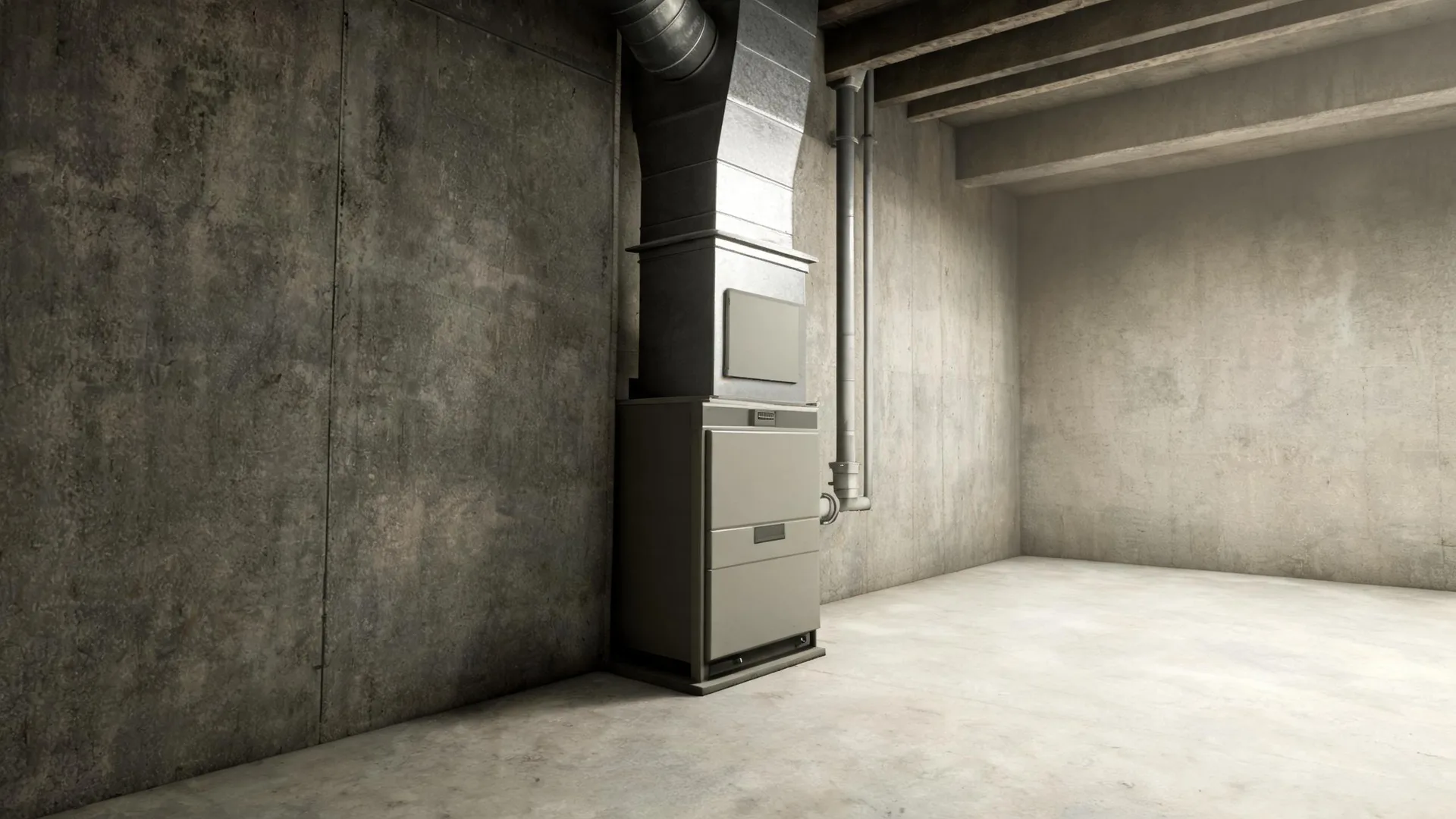
The furnace itself sits inside the house, most often in a basement, utility room, or closet. It is the box that generates heat, drawing in air, heating it, and pushing it out into the duct system. A flue pipe runs from the furnace to an exterior wall or up through the roof, carrying combustion gases out of the house.
The thermostat mounts on an interior wall where it reads the air temperature and signals the furnace to fire or shut off. A new furnace also comes with a filter housing built into or directly adjacent to the unit, holding the filter that screens the air before it enters the heat exchanger.
The drawing shows a typical layout, and a licensed contractor determines exactly what applies to your home and its existing setup.
Find a contractor in Lake CountyLake County, MT, by the numbers
195 severe weather events were recorded in Lake County, Montana between 2015 and 2024.
NOAA National Centers for Environmental Information, Storm Events Database, bulk CSV export, events 2015-01-01 through 2024-12-31.Half the homes in Lake County, Montana were built in 1986 or earlier (2020-2024 ACS 5-year).
U.S. Census Bureau, 2020-2024 American Community Survey 5-Year EstimatesLake County, Montana holds 16,468 housing units (2020-2024 ACS 5-year).
U.S. Census Bureau, 2020-2024 American Community Survey 5-Year EstimatesOwners occupy 75.0% of the occupied homes in Lake County, Montana (2020-2024 ACS 5-year).
U.S. Census Bureau, 2020-2024 American Community Survey 5-Year EstimatesFurnace & HVAC Installation Rules for Lake County, Montana6 codes & standards
What the Installation Actually Looks Like
Non-weatherized gas furnaces manufactured on or after November 19, 2015 must reach 80.0 percent AFUE.
Non-weatherized oil-fired furnaces manufactured on or after November 19, 2015 must reach 83.0 percent AFUE.
Mobile home gas furnaces manufactured on or after November 19, 2015 must reach 80.0 percent AFUE.
Non-weatherized gas furnaces manufactured on or after December 18, 2028 must reach 95.0 percent AFUE, up from the 80.0 percent minimum that applies to units manufactured before that date.
Licensing and Legal Requirements in Lake County, Montana
Montana’s contractor licence does not reach a casual, minor or inconsequential job whose total price for labour, materials and everything else is less than $2,500 — and the exemption is lost if the work is only part of a larger operation, or if a job is divided up to get under the figure.
Montana requires a current construction contractor licence from the Department of Labor and Industry: an individual or business may not engage in business as a construction contractor without one.
Weather Patterns in Lake County
Montana weather puts real demands on heating equipment, and Lake County is no exception. How hard a furnace has to work over its lifetime depends on what the local climate throws at it, which is why recorded weather events here shape the conversation about what to install and how to size it.
195 severe weather events, 2015–2024. Source: NOAA National Centers for Environmental Information, Storm Events Database.