Tell us about the job
Takes about a minute. No obligation.
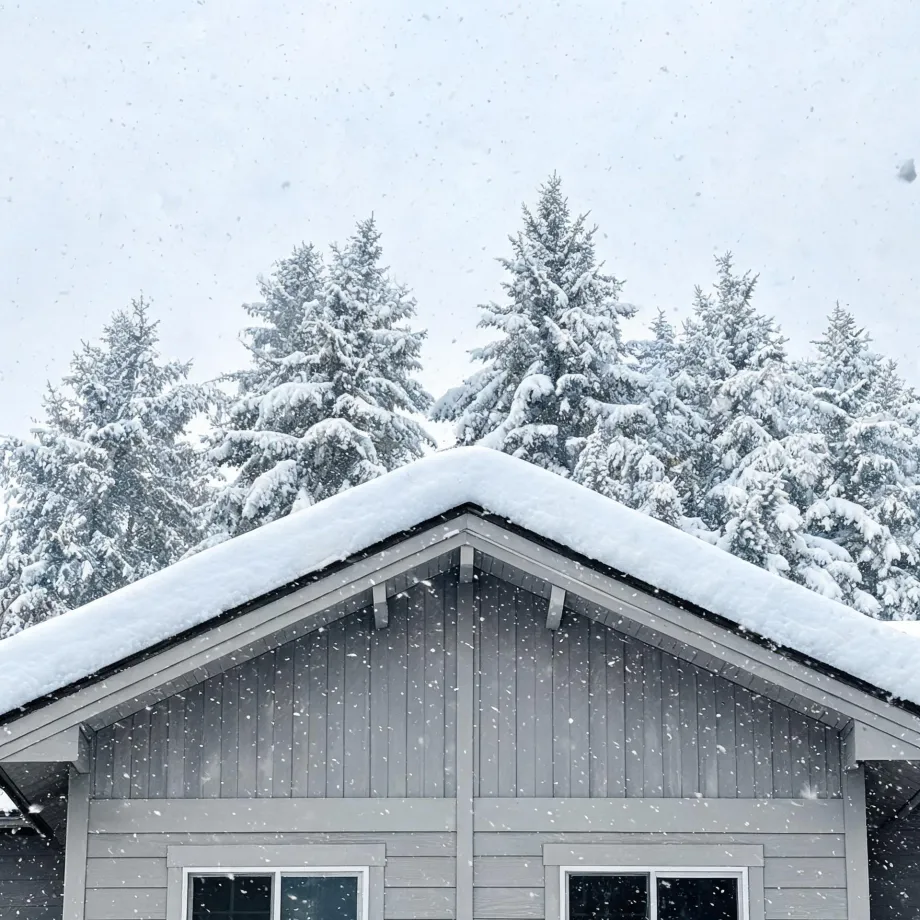
Sizing a furnace for Custer County starts with how long the burner actually runs. Homes in Custer County, MT run heat about nine months a year, from September through May. The heat exchanger, the ignition system, and the burner itself cycle through that stretch with almost no idle period to recover. An undersized unit runs longer each cycle to chase the thermostat, and that added strain shows up in the exchanger first. A contractor quoting a replacement here has to account for that load before settling on equipment, because an install that is right for a shorter season will be wrong for this one.
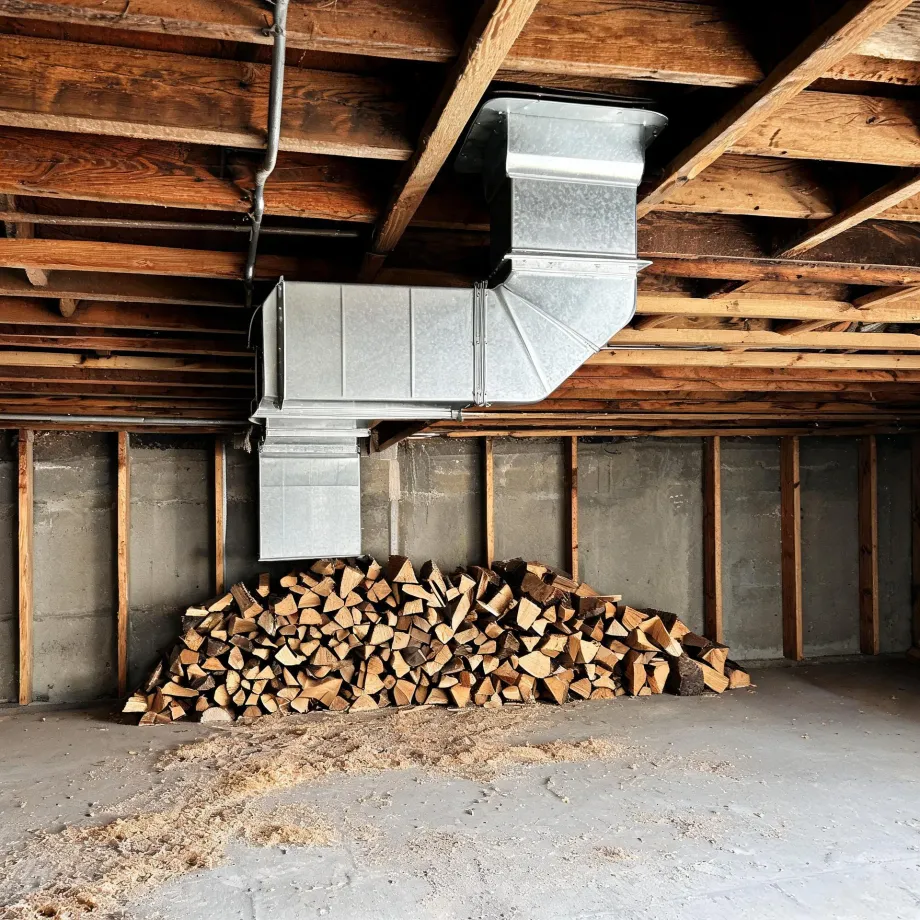
Ductwork laid down for a different system, in a house built around different expectations, does not always carry a modern furnace without modification. Half the homes in Custer County, Montana were built in 1965 or earlier (2020-2024 ACS 5-year). A contractor sizing a new unit here has to assess what the existing trunk lines and branch runs will actually deliver before the equipment choice is settled, because ducts sized for an older system can restrict airflow enough to undercut whatever efficiency the new furnace is rated for. The electrical is a separate check. What a contractor finds in both determines whether the job is a swap or a rebuild.
What Gets Installed With a New Furnace
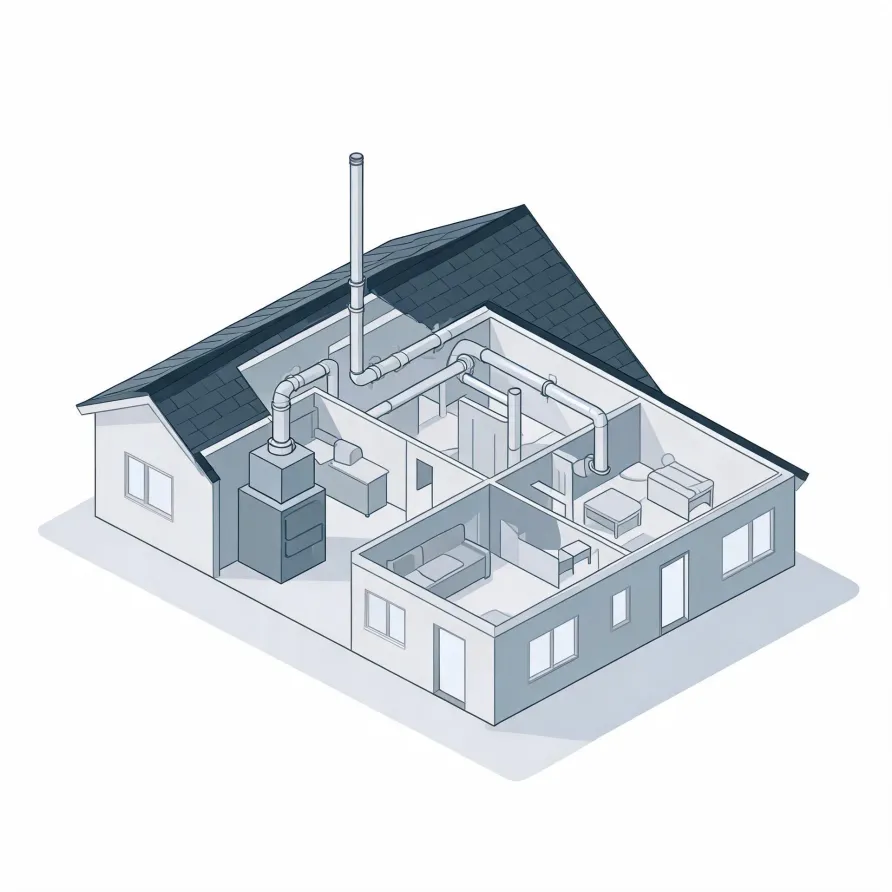
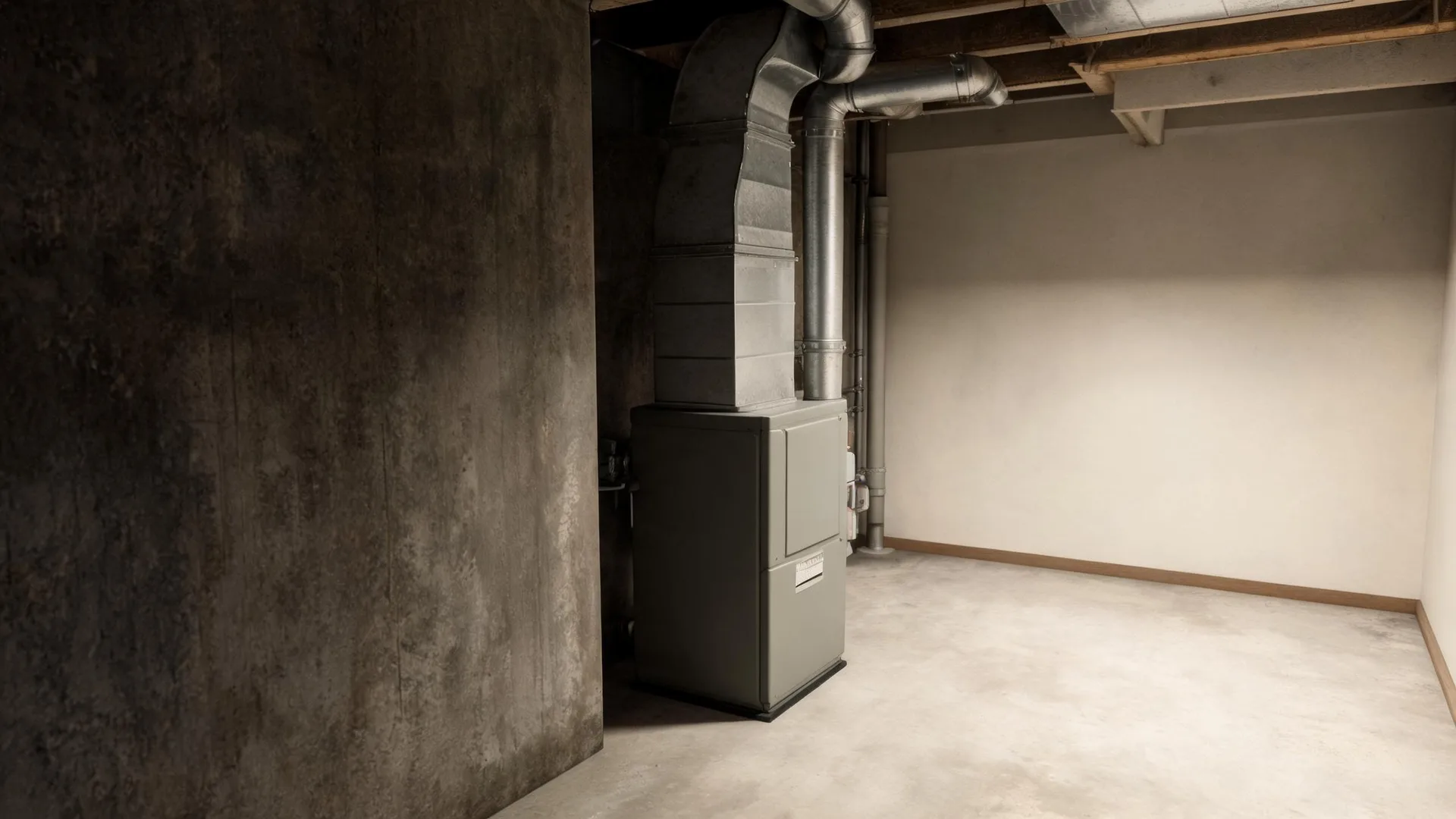
The furnace itself sits in a utility room, basement, or closet at the center of the home's heating system. A contractor sets it in place and connects it to a flue or vent pipe that exits the house, carrying combustion gases out. That cabinet is where the burners and heat exchanger live.
The air handler components work alongside the furnace cabinet, including the blower motor that pushes conditioned air into the duct system. A thermostat mounts on an interior wall and serves as the control point for the whole system. The contractor also installs or connects a fresh-air intake if the furnace design calls for one.
The drawing shows a typical layout, and a licensed contractor determines exactly what applies to your house.
Find a contractor in Custer CountyCuster County by the numbers
176 severe weather events were recorded in Custer County, Montana between 2015 and 2024.
NOAA National Centers for Environmental Information, Storm Events Database, bulk CSV export, events 2015-01-01 through 2024-12-31.Half the homes in Custer County, Montana were built in 1965 or earlier (2020-2024 ACS 5-year).
U.S. Census Bureau, 2020-2024 American Community Survey 5-Year EstimatesCuster County, Montana holds 5,784 housing units (2020-2024 ACS 5-year).
U.S. Census Bureau, 2020-2024 American Community Survey 5-Year EstimatesOwners occupy 69.9% of the occupied homes in Custer County, Montana (2020-2024 ACS 5-year).
U.S. Census Bureau, 2020-2024 American Community Survey 5-Year EstimatesFurnace Installation Rules for Custer County, Montana6 codes, standards, and laws
What the Installation Actually Looks Like
Non-weatherized gas furnaces manufactured on or after November 19, 2015 must reach 80.0 percent AFUE.
Non-weatherized oil-fired furnaces manufactured on or after November 19, 2015 must reach 83.0 percent AFUE.
Mobile home gas furnaces manufactured on or after November 19, 2015 must reach 80.0 percent AFUE.
Non-weatherized gas furnaces manufactured on or after December 18, 2028 must reach 95.0 percent AFUE, up from the 80.0 percent minimum that applies to units manufactured before that date.
Licensing Rules for HVAC Work in Custer County, Montana
Montana’s contractor licence does not reach a casual, minor or inconsequential job whose total price for labour, materials and everything else is less than $2,500 — and the exemption is lost if the work is only part of a larger operation, or if a job is divided up to get under the figure.
Montana requires a current construction contractor licence from the Department of Labor and Industry: an individual or business may not engage in business as a construction contractor without one.
Severe Weather Events in Custer County
Furnaces in Custer County work against whatever the climate delivers, and that workload shapes what equipment a home needs and how hard it runs. Weather history is part of sizing and installation decisions here, not background noise.
176 severe weather events, 2015–2024. Source: NOAA National Centers for Environmental Information, Storm Events Database.