Tell us about the job
Takes about a minute. No obligation.
Sizing a furnace here carries real consequence because the burner, the heat exchanger, and the ignition system spend little of the year at rest. Homes in Powder River County, MT run heat about nine months a year, from September through May. A contractor quoting a replacement has to calculate the actual load this house puts on a system, not work from the previous unit's nameplate. Get that wrong, and the heat exchanger runs stressed through nearly every month it operates, accumulating wear that a correctly sized unit would not. The install quality matters the same way: a poorly sealed duct run or an improperly vented combustion chamber does not get a long offseason to hide in.
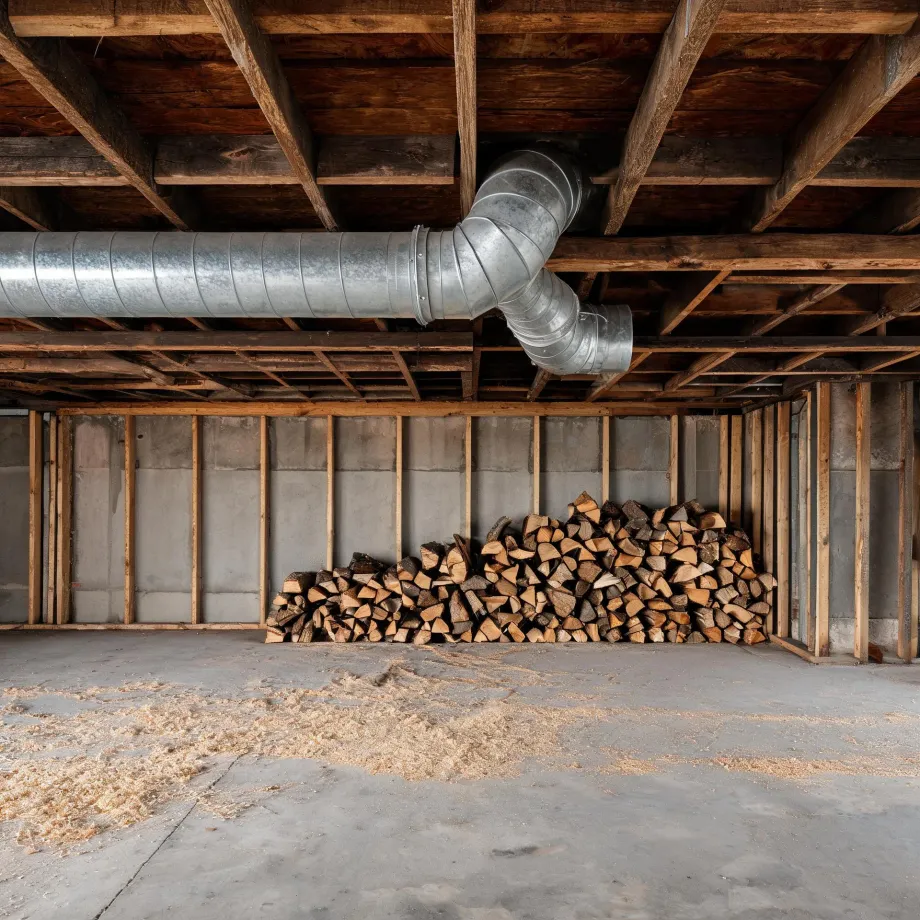
Existing ductwork is the variable that drives a furnace installation in this county. Half the homes in Powder River County, Montana were built in 1976 or earlier (2020-2024 ACS 5-year). Duct runs laid in for older equipment were sized around different static pressures and airflow volumes than a modern furnace expects, and what looks serviceable from a register can be undersized or poorly sealed once a contractor gets into it. The electrical service feeding the new unit gets the same scrutiny. A contractor who skips that assessment before writing a number is not writing a complete number.
What Gets Installed With a New Furnace
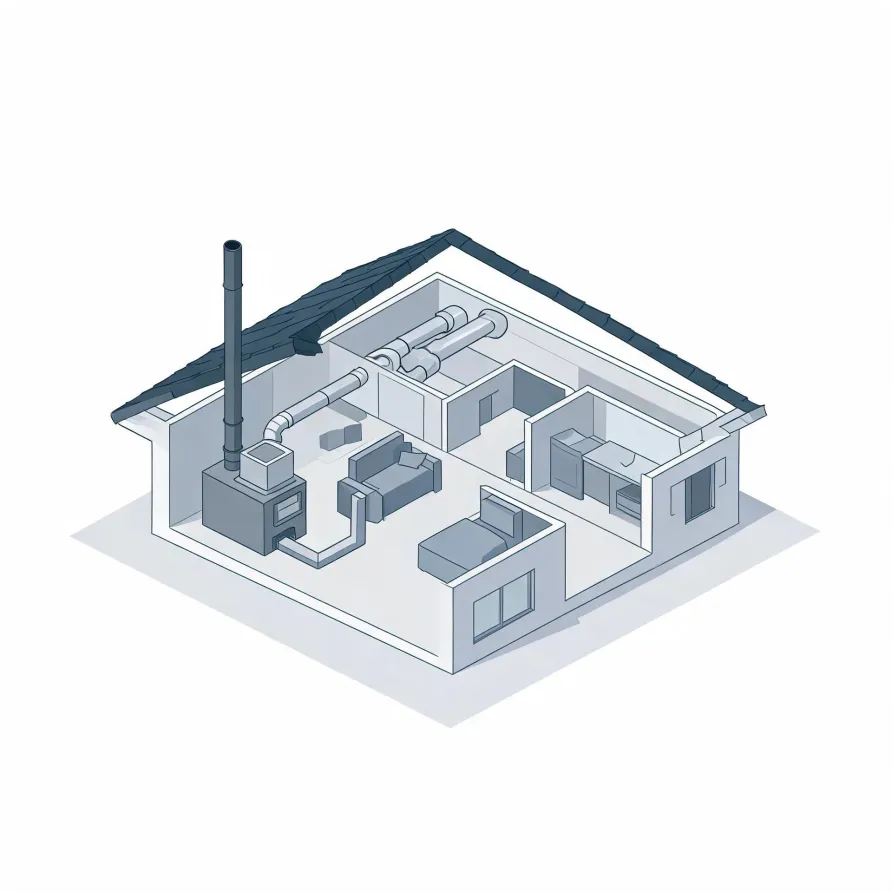
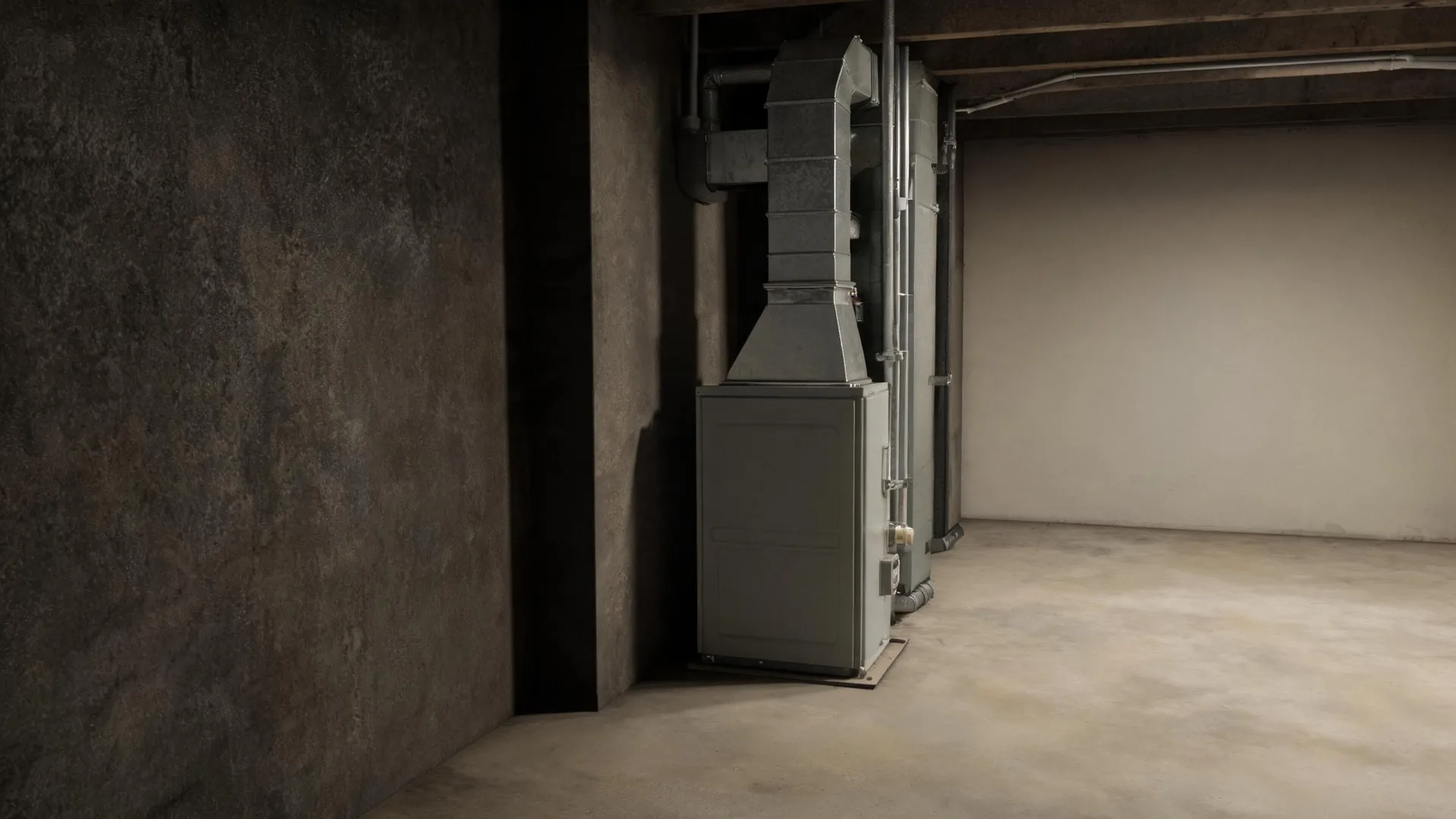
The furnace itself sits in the basement, utility room, or closet and is the central unit a contractor sets in place first. Attached to it is the flue or venting pipe, which runs to an exterior wall or the roof and carries combustion gases out of the house.
The air handler or blower cabinet connects directly to the furnace and pushes conditioned air into the duct system. The thermostat goes on an interior wall where it reads the living space temperature and tells the furnace when to fire.
The drawing shows a general layout of these components, and a licensed contractor determines exactly how each one is positioned and connected in your home.
Find a contractor in Powder River CountyPowder River County, by the record
176 severe weather events were recorded in Powder River County, Montana between 2015 and 2024.
NOAA National Centers for Environmental Information, Storm Events Database, bulk CSV export, events 2015-01-01 through 2024-12-31.Half the homes in Powder River County, Montana were built in 1976 or earlier (2020-2024 ACS 5-year).
U.S. Census Bureau, 2020-2024 American Community Survey 5-Year EstimatesPowder River County, Montana holds 972 housing units (2020-2024 ACS 5-year).
U.S. Census Bureau, 2020-2024 American Community Survey 5-Year EstimatesOwners occupy 78.8% of the occupied homes in Powder River County, Montana (2020-2024 ACS 5-year).
U.S. Census Bureau, 2020-2024 American Community Survey 5-Year EstimatesFurnace & HVAC Installation Rules for Powder River County, Montana6 sourced standards & codes
What a furnace installation looks like in Powder River County
Non-weatherized gas furnaces manufactured on or after November 19, 2015 must reach 80.0 percent AFUE.
Non-weatherized oil-fired furnaces manufactured on or after November 19, 2015 must reach 83.0 percent AFUE.
Mobile home gas furnaces manufactured on or after November 19, 2015 must reach 80.0 percent AFUE.
Non-weatherized gas furnaces manufactured on or after December 18, 2028 must reach 95.0 percent AFUE, up from the 80.0 percent minimum that applies to units manufactured before that date.
Licensing Rules for HVAC Work in Powder River County, Montana
Montana’s contractor licence does not reach a casual, minor or inconsequential job whose total price for labour, materials and everything else is less than $2,500 — and the exemption is lost if the work is only part of a larger operation, or if a job is divided up to get under the figure.
Montana requires a current construction contractor licence from the Department of Labor and Industry: an individual or business may not engage in business as a construction contractor without one.
Severe Weather Events in Powder River County
Powder River County winters put real strain on heating equipment, and that strain compounds with every weather event a system has to work through. Furnace installations here are sized and specified against local conditions, and the record below shows what those conditions look like over time.
176 severe weather events, 2015–2024. Source: NOAA National Centers for Environmental Information, Storm Events Database.