Tell us about the job
Takes about a minute. No obligation.
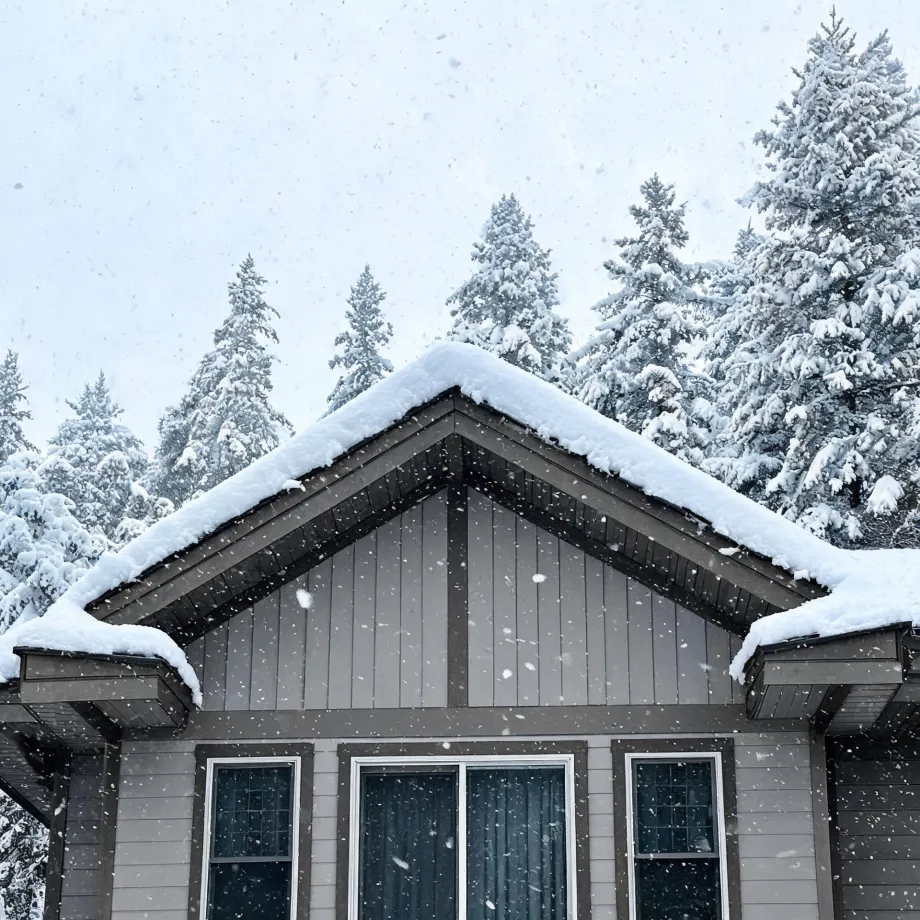
Sizing a furnace for Glacier County starts with what the burner and heat exchanger are actually being asked to carry. Homes in Glacier County, MT run heat in every month of the year. That means the ignition system cycles, the heat exchanger expands and contracts, and the burner fires through every month without the long idle periods that give marginal installs somewhere to hide. A contractor doing the load calculation here has to account for that continuous demand before settling on equipment capacity, because an undersized unit does not coast through a mild stretch and recover.
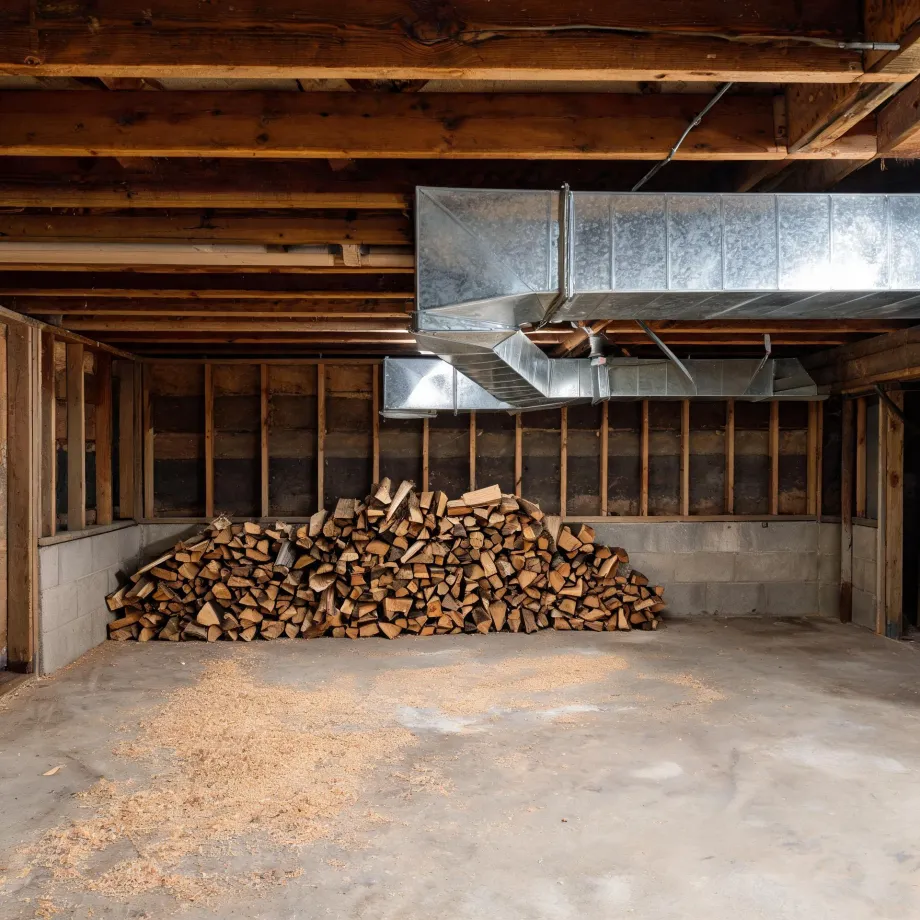
Ductwork sized for a different era of heating equipment is what a contractor opens the walls to find in much of Glacier County. Half the homes in Glacier County, Montana were built in 1974 or earlier (2020-2024 ACS 5-year). A furnace that is correctly sized for the house can still force a contractor to reprice the job once the existing duct runs turn out to be too narrow or too leaky to carry what the new unit moves. The electrical is a separate check. What gets quoted on day one and what gets billed at the end can look different for exactly that reason.
What Gets Installed With a New Furnace
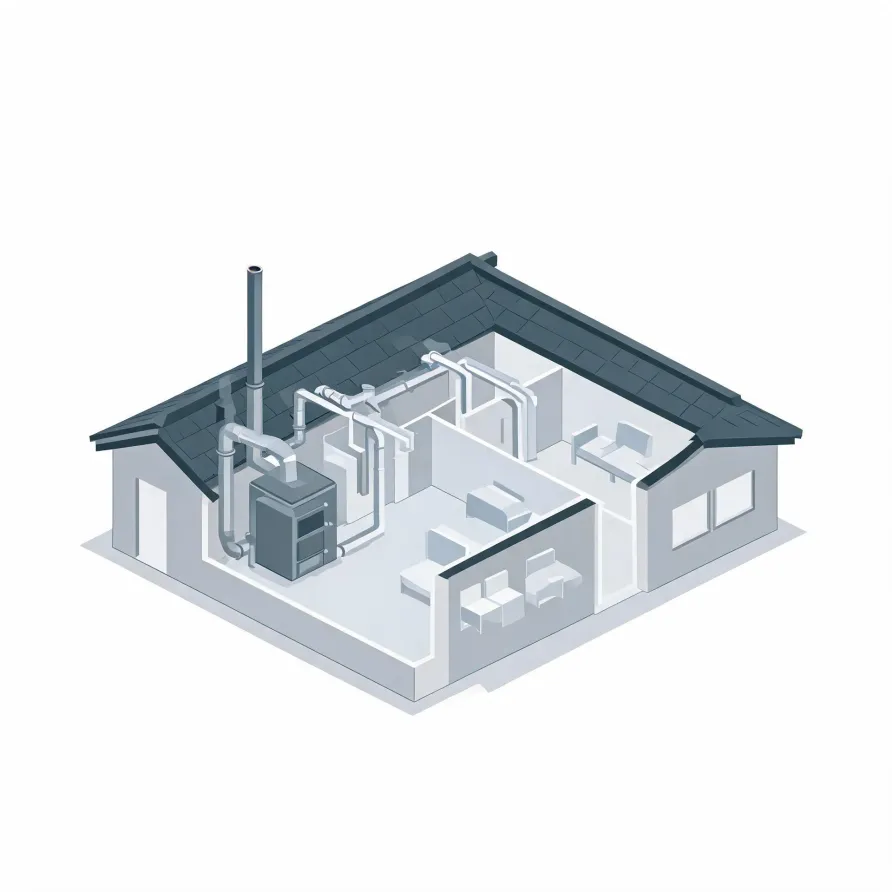
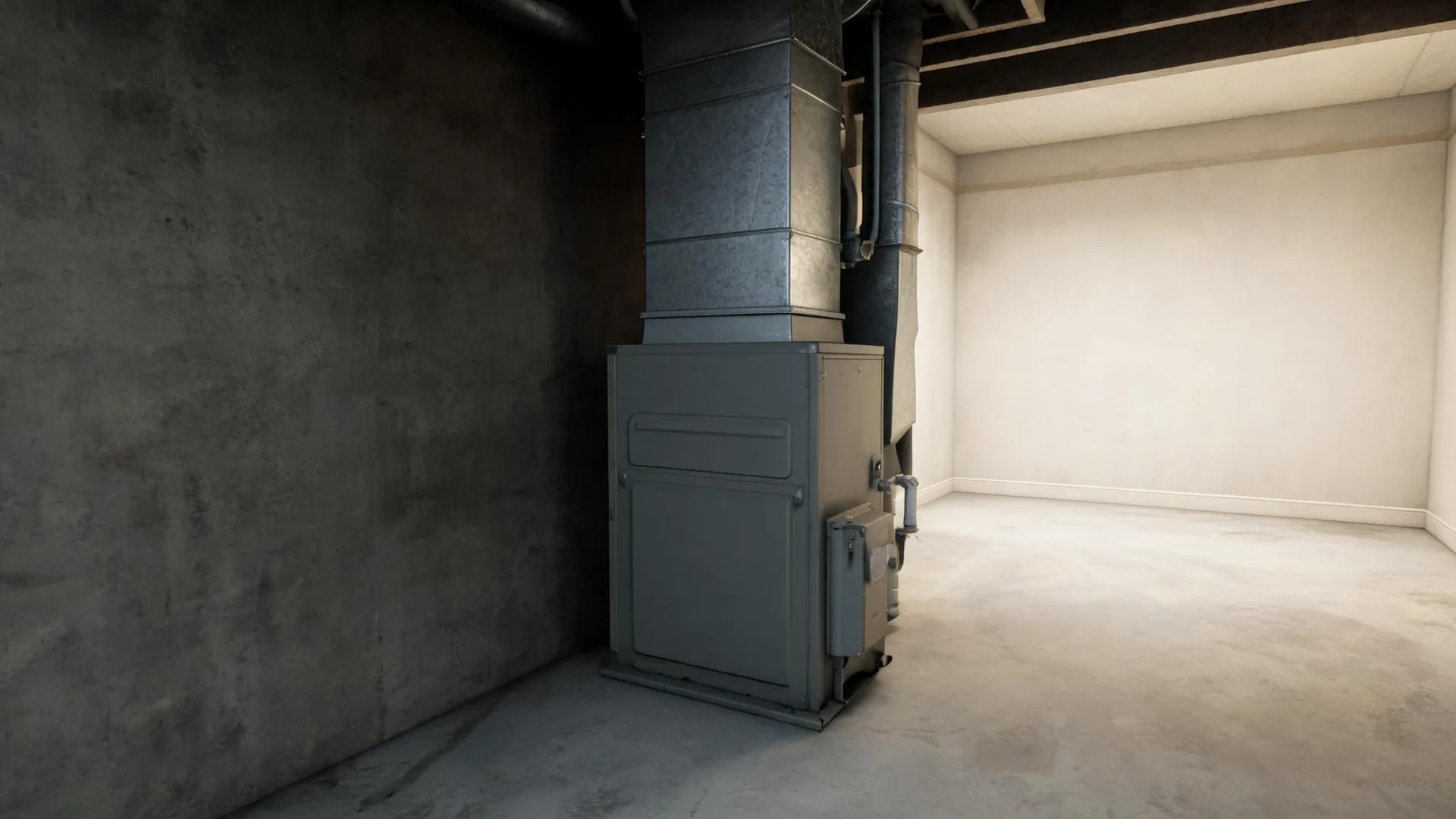
The furnace itself sits in a utility space, basement, or closet and is the unit that produces heat for the house. A licensed contractor mounts it, connects it to the fuel supply, and ties it into the home's existing ductwork. The flue pipe runs from the furnace to an exterior wall or through the roof, carrying combustion gases out of the living space.
The air handler and blower assembly move conditioned air through the ducts once the furnace fires. The thermostat goes on an interior wall and is the control point the homeowner touches daily. A new furnace install also brings a fresh filter housing and, where the equipment requires it, a condensate drain line routed to a nearby floor drain.
The drawing shows a typical layout, and a licensed contractor determines exactly what the installation involves in your specific home.
Find a contractor in Glacier CountyGlacier County, by the numbers
250 severe weather events were recorded in Glacier County, Montana between 2015 and 2024.
NOAA National Centers for Environmental Information, Storm Events Database, bulk CSV export, events 2015-01-01 through 2024-12-31.Half the homes in Glacier County, Montana were built in 1974 or earlier (2020-2024 ACS 5-year).
U.S. Census Bureau, 2020-2024 American Community Survey 5-Year EstimatesGlacier County, Montana holds 5,350 housing units (2020-2024 ACS 5-year).
U.S. Census Bureau, 2020-2024 American Community Survey 5-Year EstimatesOwners occupy 63.7% of the occupied homes in Glacier County, Montana (2020-2024 ACS 5-year).
U.S. Census Bureau, 2020-2024 American Community Survey 5-Year EstimatesCodes & Standards Governing Furnace Installation in Glacier County, Montana6 sourced rules and standards
What the Installation Actually Looks Like
Non-weatherized gas furnaces manufactured on or after November 19, 2015 must reach 80.0 percent AFUE.
Non-weatherized oil-fired furnaces manufactured on or after November 19, 2015 must reach 83.0 percent AFUE.
Mobile home gas furnaces manufactured on or after November 19, 2015 must reach 80.0 percent AFUE.
Non-weatherized gas furnaces manufactured on or after December 18, 2028 must reach 95.0 percent AFUE, up from the 80.0 percent minimum that applies to units manufactured before that date.
Licensing Rules for HVAC Work in Glacier County, Montana
Montana’s contractor licence does not reach a casual, minor or inconsequential job whose total price for labour, materials and everything else is less than $2,500 — and the exemption is lost if the work is only part of a larger operation, or if a job is divided up to get under the figure.
Montana requires a current construction contractor licence from the Department of Labor and Industry: an individual or business may not engage in business as a construction contractor without one.
Severe Weather Events in Glacier County
Glacier County's climate puts real demands on heating equipment, and those demands vary from year to year based on what the weather delivers. A furnace sized and installed for local conditions handles that variability better than one specified to a national average.
250 severe weather events, 2016–2024. Source: NOAA National Centers for Environmental Information, Storm Events Database.