Tell us about the job
Takes about a minute. No obligation.
Sizing a furnace for Blaine County is not a generic exercise. Homes in Blaine County, MT run heat about ten months a year, from September through June. A burner and heat exchanger cycling through that stretch accumulate wear at a pace that makes the quality of the original install consequential from the start. Undersized equipment runs longer per cycle, and in a county where the system rarely sits idle, that difference compounds across the equipment's life. A contractor quoting a new furnace here factors that sustained demand into both the equipment selection and how tightly the installation is executed.
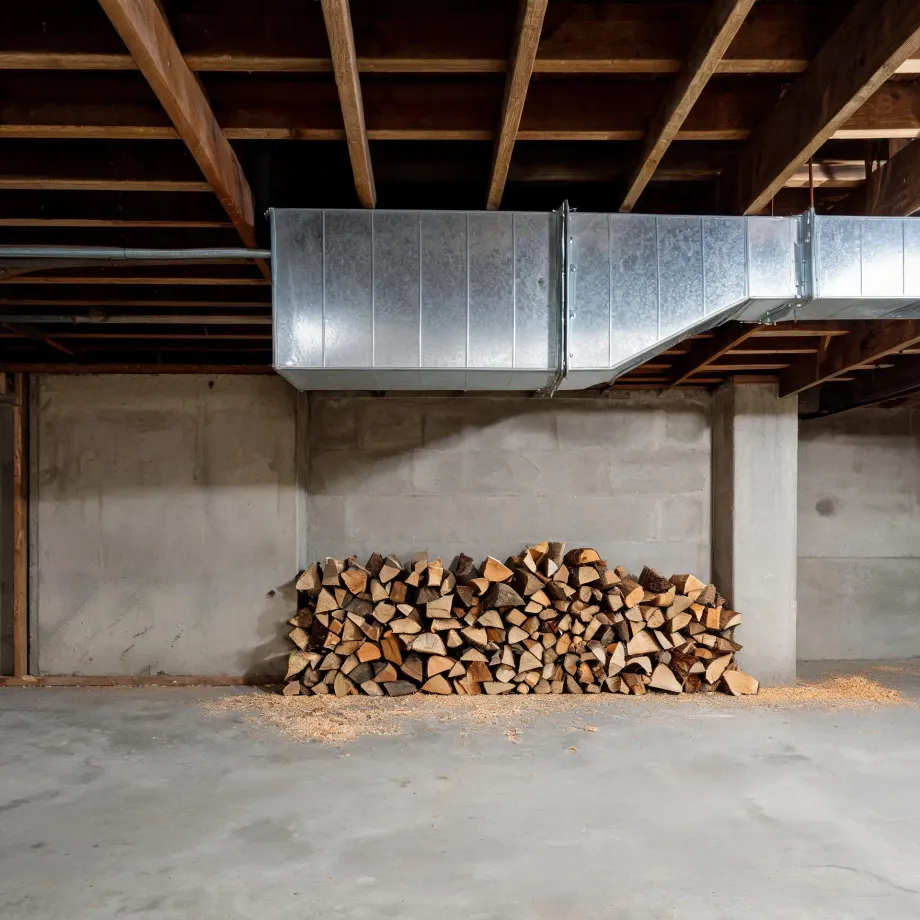
Ductwork laid out for a furnace that has since been replaced at least once rarely moves air the way a new unit needs it to. Half the homes in Blaine County, Montana were built in 1972 or earlier (2020-2024 ACS 5-year). That depth of housing stock means a contractor opening up an install job is often working with trunk lines and branch runs that were never sized for what a current high-efficiency furnace expects to push through them. The electrical side carries its own questions. What a contractor finds in the walls determines whether the installation is straightforward or whether the duct system has to be reworked before the new unit can do its job.
What Gets Installed With a New Furnace
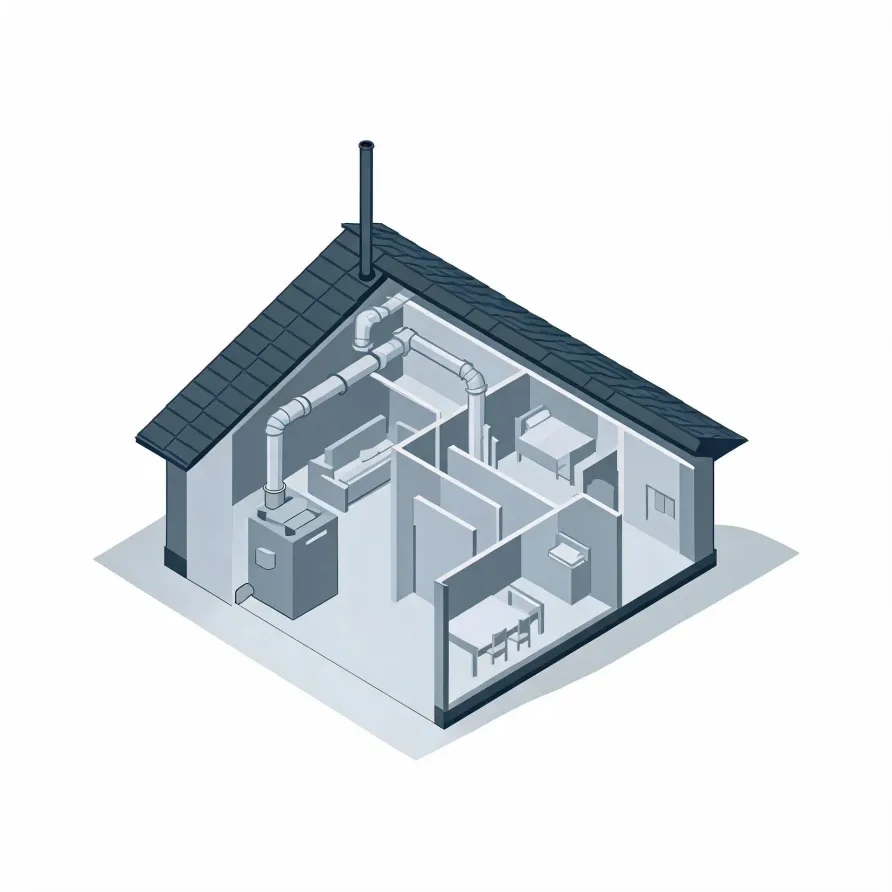
The furnace itself sits inside the home, most often in a basement, utility room, or closet. It is the unit that generates heat, drawing in return air, warming it, and pushing it back through the house. The air handler, where present, mounts alongside or in place of the furnace and moves conditioned air through the supply side of the system.
The flue pipe runs from the furnace to an exterior wall or through the roof, carrying combustion gases out of the house. The thermostat mounts on an interior wall and serves as the control point for the whole system, telling the furnace when to fire and when to shut off.
The drawing shows a typical layout, and a licensed contractor determines exactly how each piece applies to your home.
Find a contractor in Blaine CountyBlaine County by the numbers
95 severe weather events were recorded in Blaine County, Montana between 2015 and 2024.
NOAA National Centers for Environmental Information, Storm Events Database, bulk CSV export, events 2015-01-01 through 2024-12-31.Half the homes in Blaine County, Montana were built in 1972 or earlier (2020-2024 ACS 5-year).
U.S. Census Bureau, 2020-2024 American Community Survey 5-Year EstimatesBlaine County, Montana holds 2,823 housing units (2020-2024 ACS 5-year).
U.S. Census Bureau, 2020-2024 American Community Survey 5-Year EstimatesOwners occupy 65.7% of the occupied homes in Blaine County, Montana (2020-2024 ACS 5-year).
U.S. Census Bureau, 2020-2024 American Community Survey 5-Year EstimatesFurnace & HVAC Installation Rules for Blaine County, Montana6 sourced standards & codes
What HVAC Installation Looks Like in Blaine County
Non-weatherized gas furnaces manufactured on or after November 19, 2015 must reach 80.0 percent AFUE.
Non-weatherized oil-fired furnaces manufactured on or after November 19, 2015 must reach 83.0 percent AFUE.
Mobile home gas furnaces manufactured on or after November 19, 2015 must reach 80.0 percent AFUE.
Non-weatherized gas furnaces manufactured on or after December 18, 2028 must reach 95.0 percent AFUE, up from the 80.0 percent minimum that applies to units manufactured before that date.
Licensing and Legal Requirements in Blaine County, Montana
Montana’s contractor licence does not reach a casual, minor or inconsequential job whose total price for labour, materials and everything else is less than $2,500 — and the exemption is lost if the work is only part of a larger operation, or if a job is divided up to get under the figure.
Montana requires a current construction contractor licence from the Department of Labor and Industry: an individual or business may not engage in business as a construction contractor without one.
Severe Weather Events in Blaine County
Blaine County's climate puts real demands on heating equipment. How hard a furnace has to work, and how long it lasts, is shaped by what the weather here asks of it year after year.
95 severe weather events, 2016–2024. Source: NOAA National Centers for Environmental Information, Storm Events Database.