Leaking only in winter
A line that drains fine in October but backs up in January is likely freezing somewhere along an unheated run, not clogged with sludge. Cold is the trigger, not dirt.
Explain it one time
Water pooling under a gas furnace usually means a cracked heat exchanger, a clogged condensate line, or ice melting off the flue. Figuring out which one takes someone who's opened up this equipment before. This page walks through what's behind it so you're not stuck calling around Montana for a contractor who'll actually get back to you.
Start one formA furnace leaking water is almost always a high-efficiency gas furnace, the kind that produces condensation as part of running. That water is supposed to drain out through a condensate line and a trap. When it shows up on the floor instead, the line or trap is usually clogged, cracked, or sitting at the wrong slope to drain right. Sometimes the problem is up higher, where the flue pipe is venting exhaust and moisture is condensing inside it and dripping back down. Less often, the furnace isn't the real high-efficiency type at all, and what looks like a leak is ice built up on a flue pipe outside melting and running back in. Each of these points to a different fix, and none of them clear up by leaving the furnace running. A furnace that keeps leaking can shut itself down on a safety switch, or let water reach parts that shouldn't get wet.
A high-efficiency furnace burns gas and cools the exhaust enough to pull water out of it, usually a gallon or more a day. That water drops into a trap, then runs out through a plastic line to a floor drain or a condensate pump. The line is narrow, and it only takes a small clog of algae or sediment to back the whole thing up. Once it backs up, the trap overflows and water shows up right at the base of the furnace.
The heat exchanger is the metal chamber that separates the flame from the air moving through your ducts. Over years of heating and cooling, the metal expands and contracts, and it can split. A crack lets flue gas and moisture mix with the air stream, and some of that moisture condenses on the metal and drips down into the cabinet. This isn't something to patch. A contractor checks it with a camera or a pressure test before deciding what the furnace needs.
You already know the line runs from the trap to a drain or a pump. What you want to know is why it stops draining in the first place, since that's the part that actually leads to water on your floor.
The water coming off a high-efficiency furnace is slightly acidic, and it picks up dust and debris on its way through the line. Over months that builds a slime inside the plastic tubing, narrowing it until water backs up and finds another way out. If any part of the line or its drain runs through an unheated space, or terminates outside, that stretch can freeze solid during a Montana cold snap. Ice blocks the line the same way sludge does. Either way the trap fills, water has nowhere to go but back toward the furnace cabinet, and it ends up on the floor underneath.
Exhaust gas cools inside the secondary heat exchanger as it passes through.
Water vapor in the exhaust condenses into liquid water.
Condensate drips down into the drain trap below the exchanger.
Water runs from the trap through the plastic line to the drain.


Water on the floor near the furnace, usually in the same spot each time. Sometimes it's just a damp patch that dries and comes back. You might notice a musty smell, rust forming on the bottom of the cabinet, or the floor around the unit feeling soft if it's been going on a while. If the furnace is shutting off on its own and then starting again later, that's often the limit switch responding to the water. In Montana, a line that's freezing can also mean ice built up somewhere it shouldn't be, which backs water up faster than a simple clog. Left alone, the water sitting under the cabinet can rust through the furnace itself and ruin the floor underneath it.




You've already read what's probably causing this. Knowing it's the condensate line, the trap, or a crack in the heat exchanger is one thing. Getting underneath your furnace with a flashlight and sorting out which one it actually is, is another. That's a different skill, and it's the kind you only get from doing it on this equipment season after season, in homes around Montana running the same gas furnaces through the same cold months. Finding someone with that skill usually means searching around, calling a few numbers, describing the puddle and the smell more than once, then weighing quotes against each other while the water keeps showing up on your floor. Ask here instead, and the request goes to one licensed contractor working near you, not a handful of companies competing for the job. No retelling the story five times, no guessing which quote to trust. Just someone who already knows what's usually behind water under a furnace like yours, looking at the actual leak.
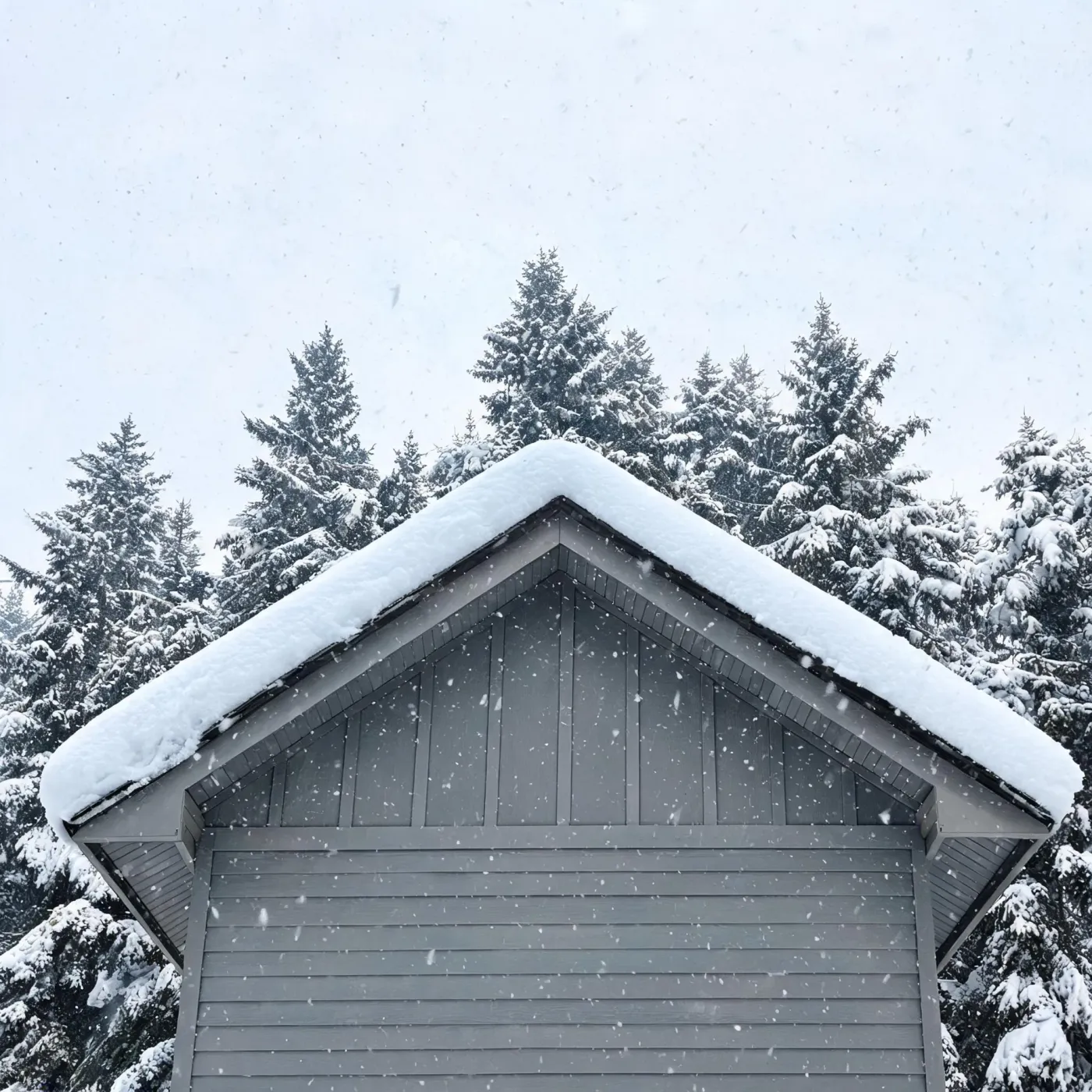
Winter nights average 15°F statewide, according to NOAA climate data. That's cold enough for a furnace to run long stretches without shutting off, especially overnight. A condensate line that's draining slowly instead of clogging outright can freeze solid during one of those long runs, and that's often when the water shows up on the floor, usually in the morning after the coldest part of the night. If your furnace sits in an unheated basement or garage, the line is even more exposed to that cold, since there's no warm room air around it to keep the water moving.
NOAA nClimDiv 1991-2020 county normals weighted by homes


A line that drains fine in October but backs up in January is likely freezing somewhere along an unheated run, not clogged with sludge. Cold is the trigger, not dirt.
If water shows up even when it's warm outside, freezing isn't the cause. That points to a clogged trap, a failing condensate pump, or a crack in the heat exchanger itself.


Right now you're trying to figure out whether this is worth a service call or something you can leave alone. You don't know if it's the line, the trap, or the heat exchanger, and you don't want to call three companies just to find someone willing to look under a furnace and tell you straight. Some homeowners put it off because sorting through contractors feels like its own chore on top of the leak itself. Meanwhile the water keeps showing up in the same spot, the cabinet stays damp, and if it's the heat exchanger, the furnace keeps running the way it's running until someone opens it up.
A local contractor who works on furnaces all winter has likely seen this exact leak before, in a house not far from yours. You explain it once, they run a flame sensor and combustion test, and you know within one visit which part is actually failing. No comparing quotes from a handful of companies, no re-explaining the same leak over the phone to each one. Depending on what they find, the line gets cleared, the trap gets reset, or you learn the heat exchanger needs replacing before it's a bigger problem. Either way, you're no longer guessing at what's dripping onto your floor.
At 15°F overnight, your furnace is running almost nonstop to keep up. A line that's draining slowly rather than freely has hours of cold to turn that trickle to ice before morning. That's often enough to back the water up into the cabinet and onto your floor.
NOAA nClimDiv 1991-2020 county normals weighted by homes

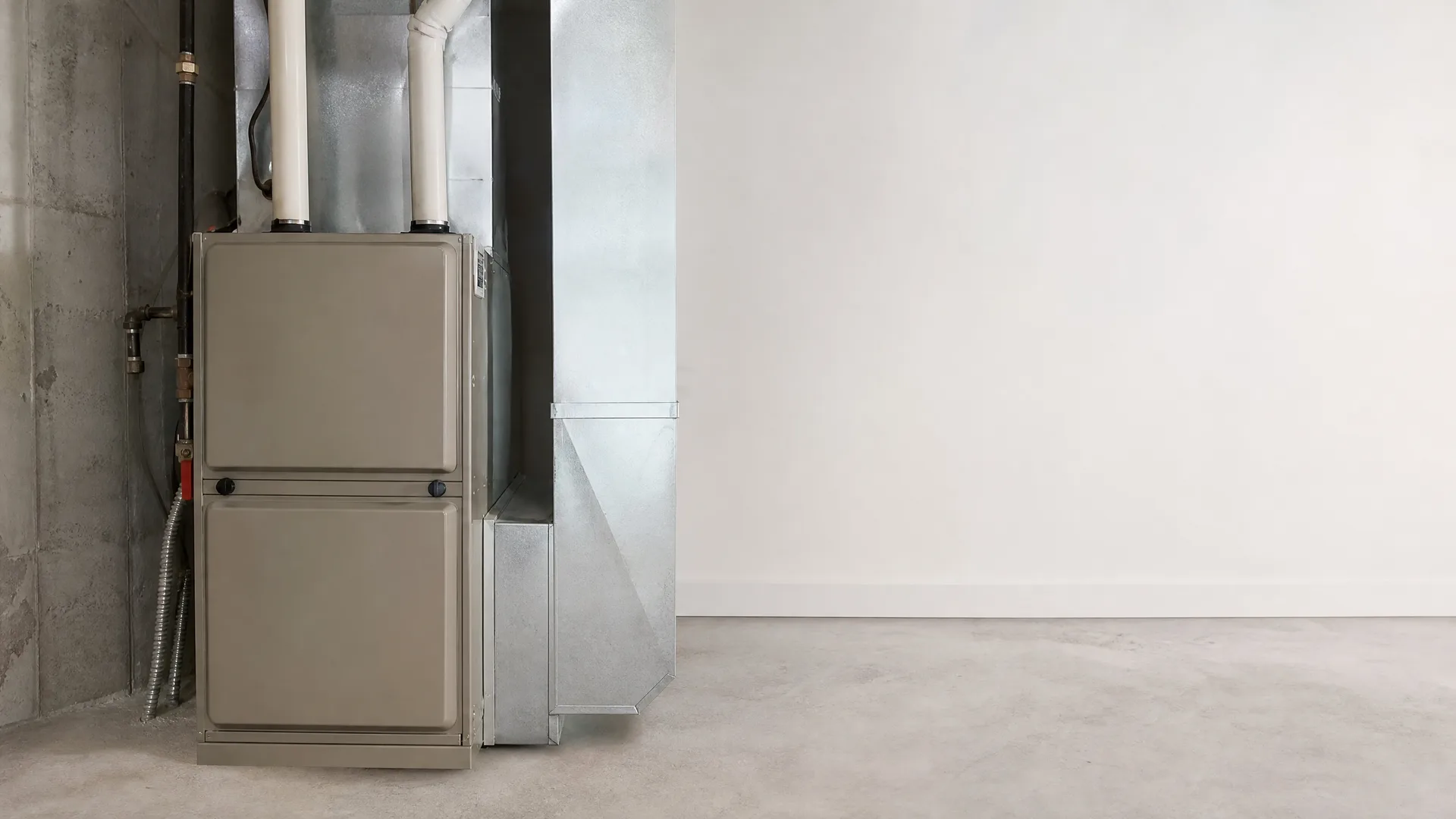
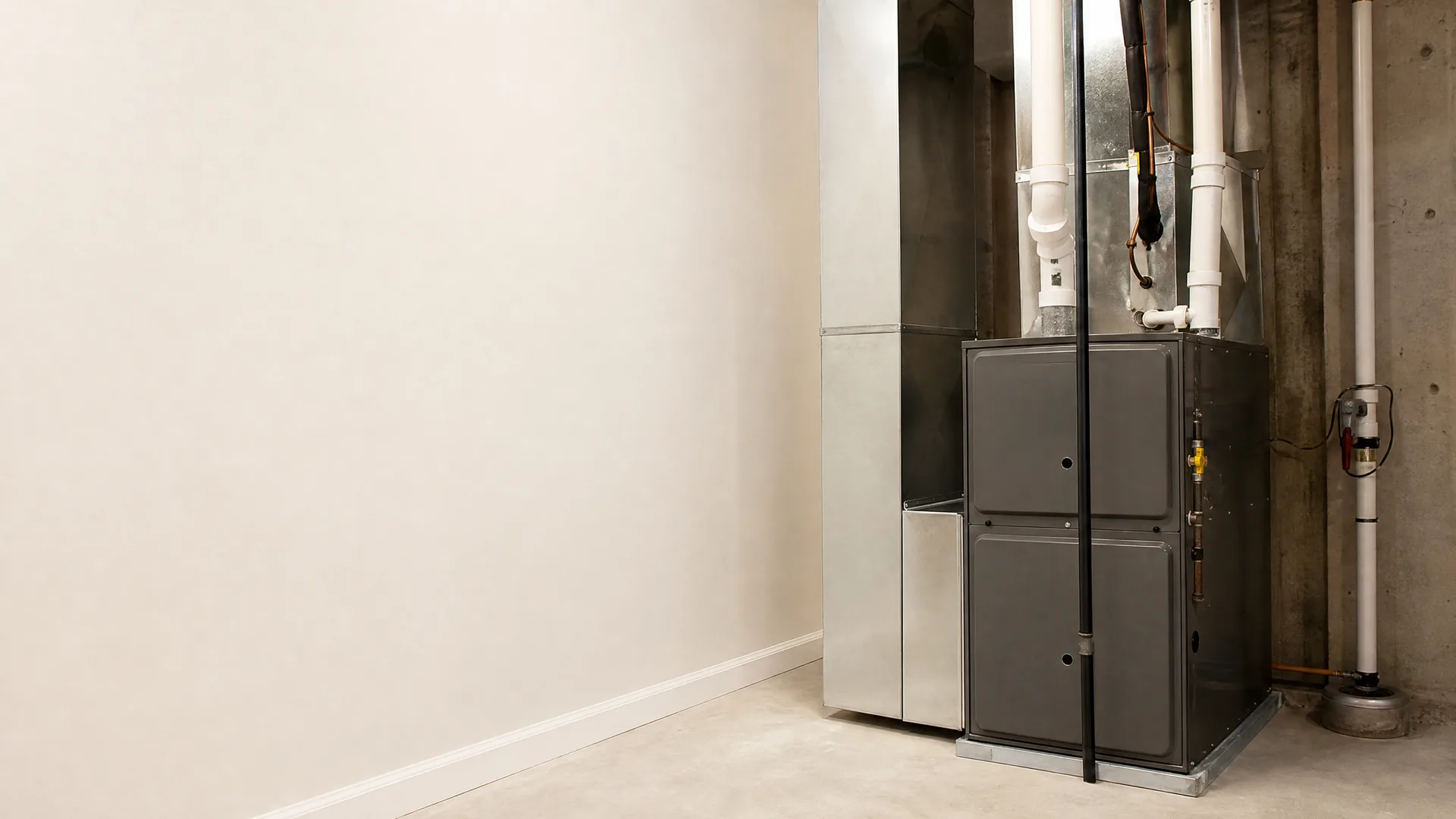
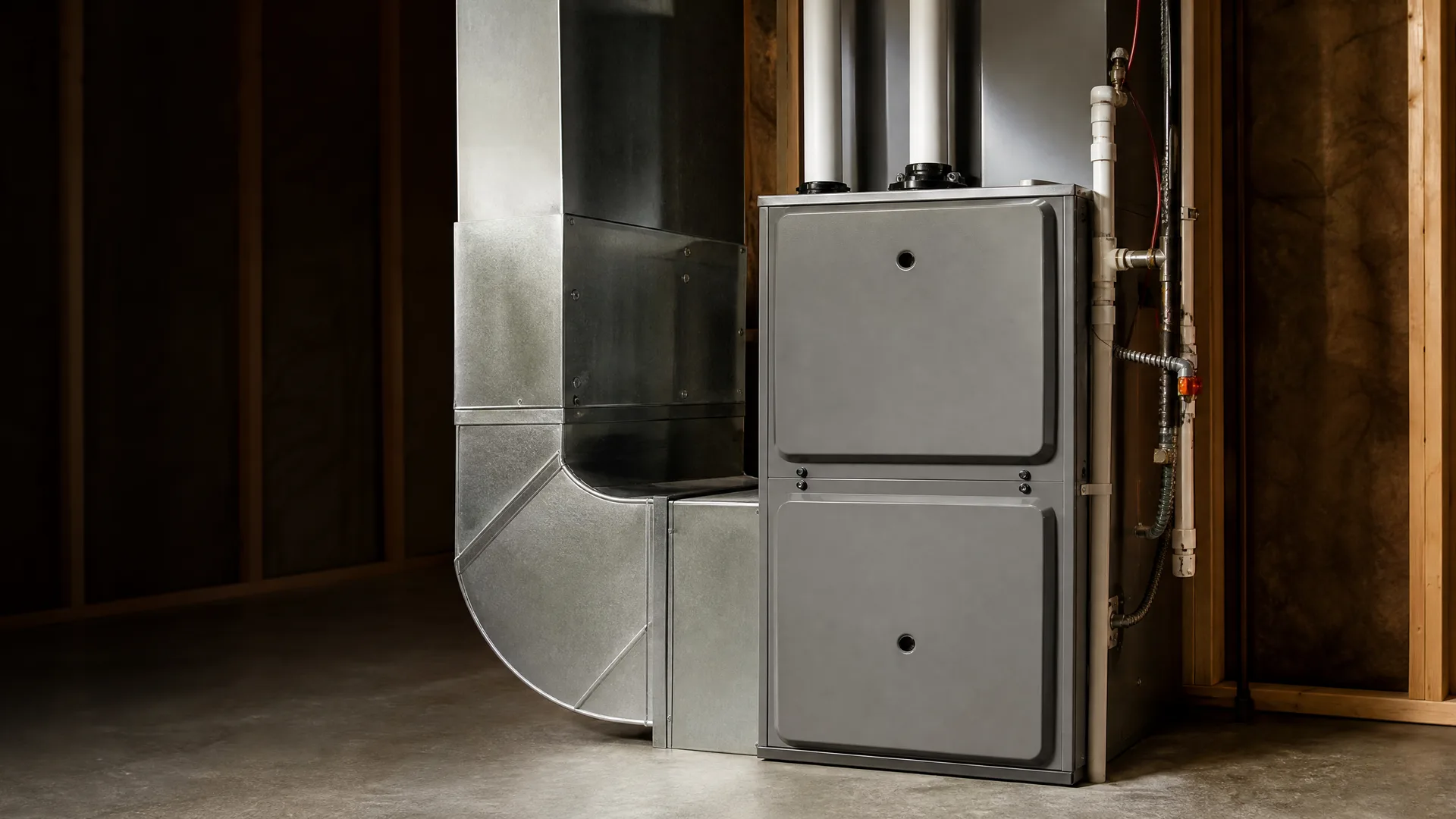
The cabinet is dry underneath and around the base. The PVC condensate pipe carries water out on its own, steady and unnoticed. Gas lines, exhaust, and ductwork all sit clean and connected, which is what a furnace looks like when nothing's wrong.

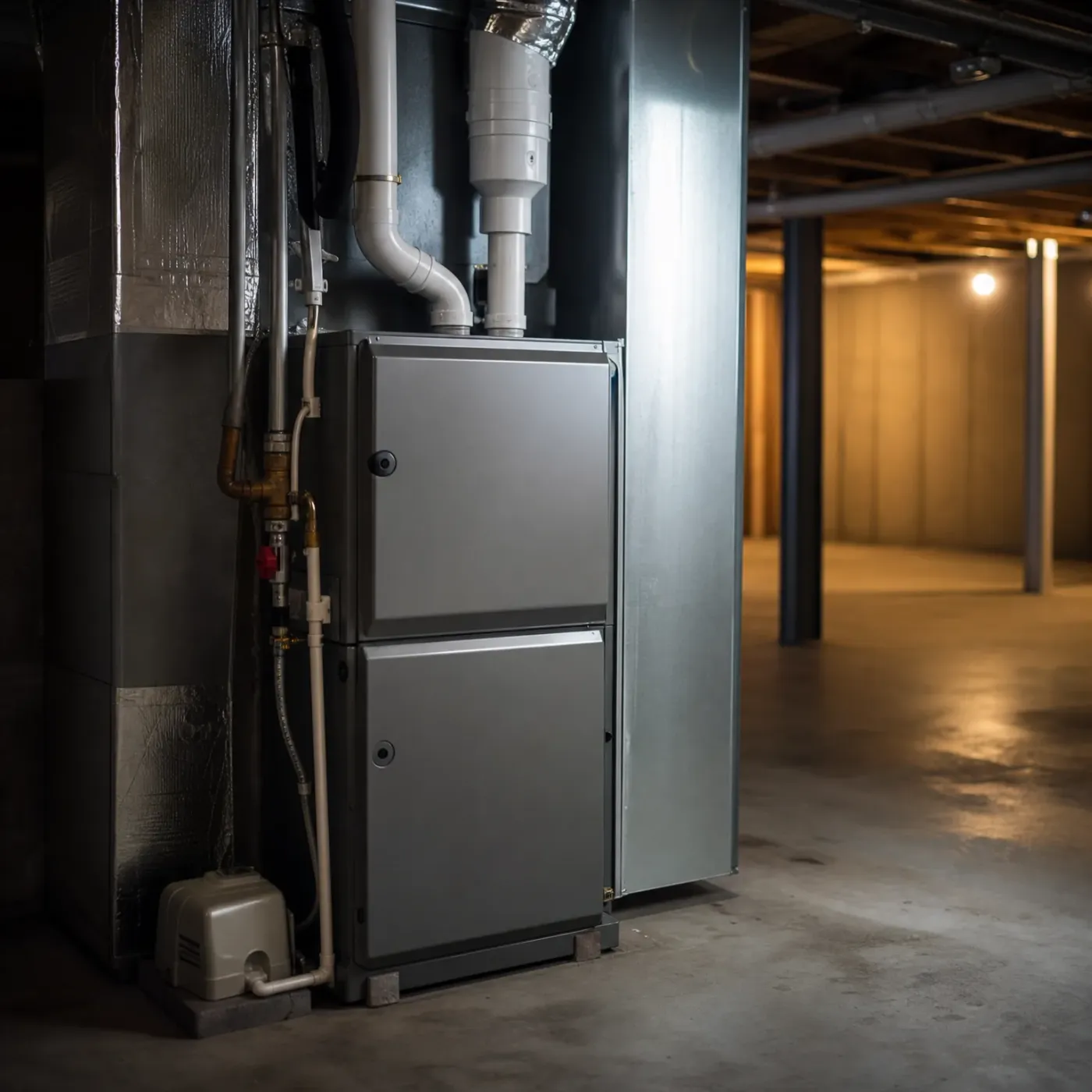
Water has found its way down the side of this furnace and onto the concrete floor below. The condensate pipe is still attached, but whatever is supposed to carry that water away isn't doing its job right now.

A furnace leaking water almost always comes down to one of three things: a clogged condensate line, a frozen line, or a cracked heat exchanger. The first two are a repair. The third means the furnace needs to come out of service until it's replaced. You won't know which one you've got until someone traces the line and runs a combustion test, and that's not a guess you want to get wrong given what a cracked exchanger puts into your air.
You don't need to call around Montana to find someone who'll do that. A licensed local contractor who works on furnaces like yours all winter can look at what's pooling under your cabinet and tell you straight what's causing it, without you explaining the same thing to three different companies and sorting through three different quotes. One contractor, already familiar with this kind of furnace, looking at your specific problem.

Describe it once