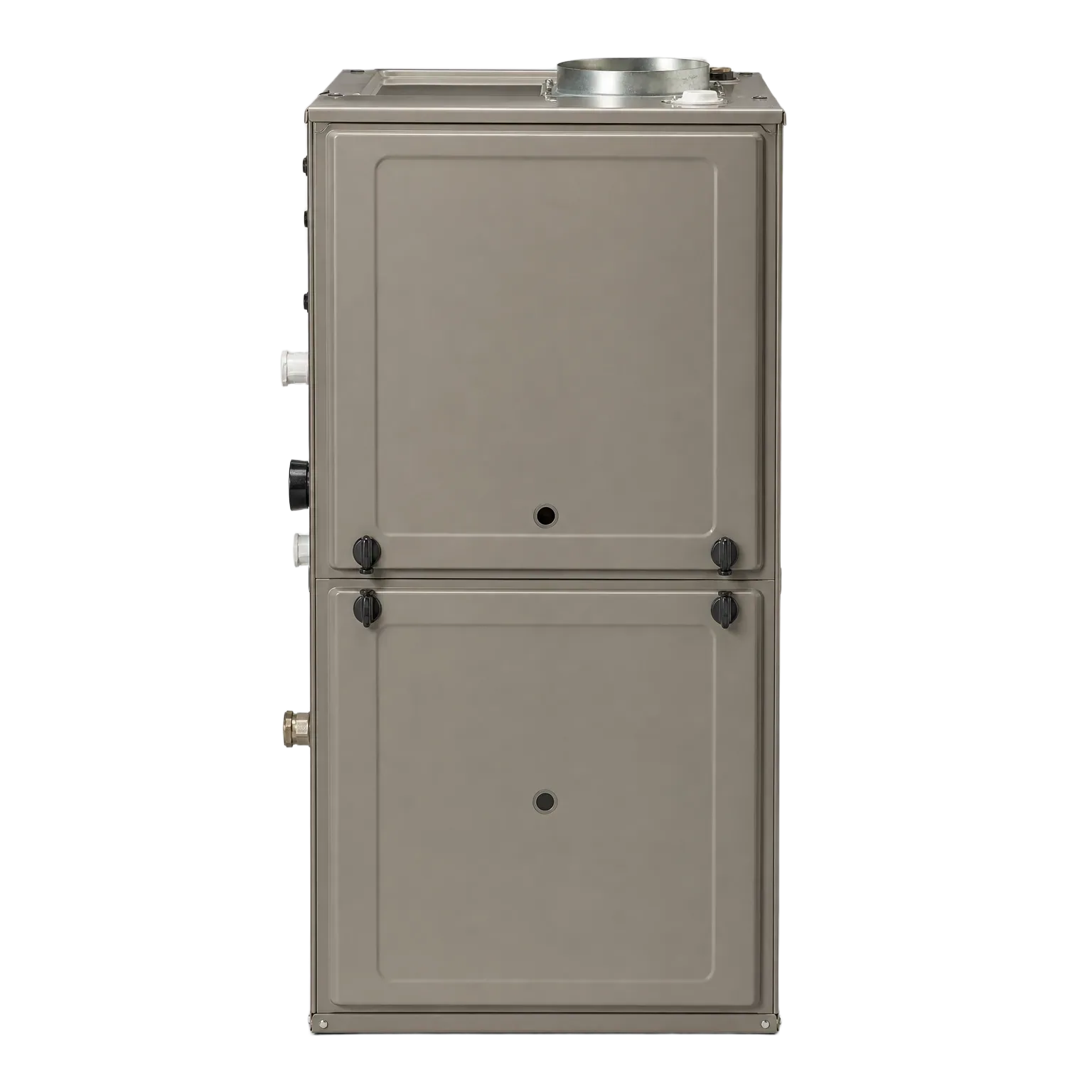
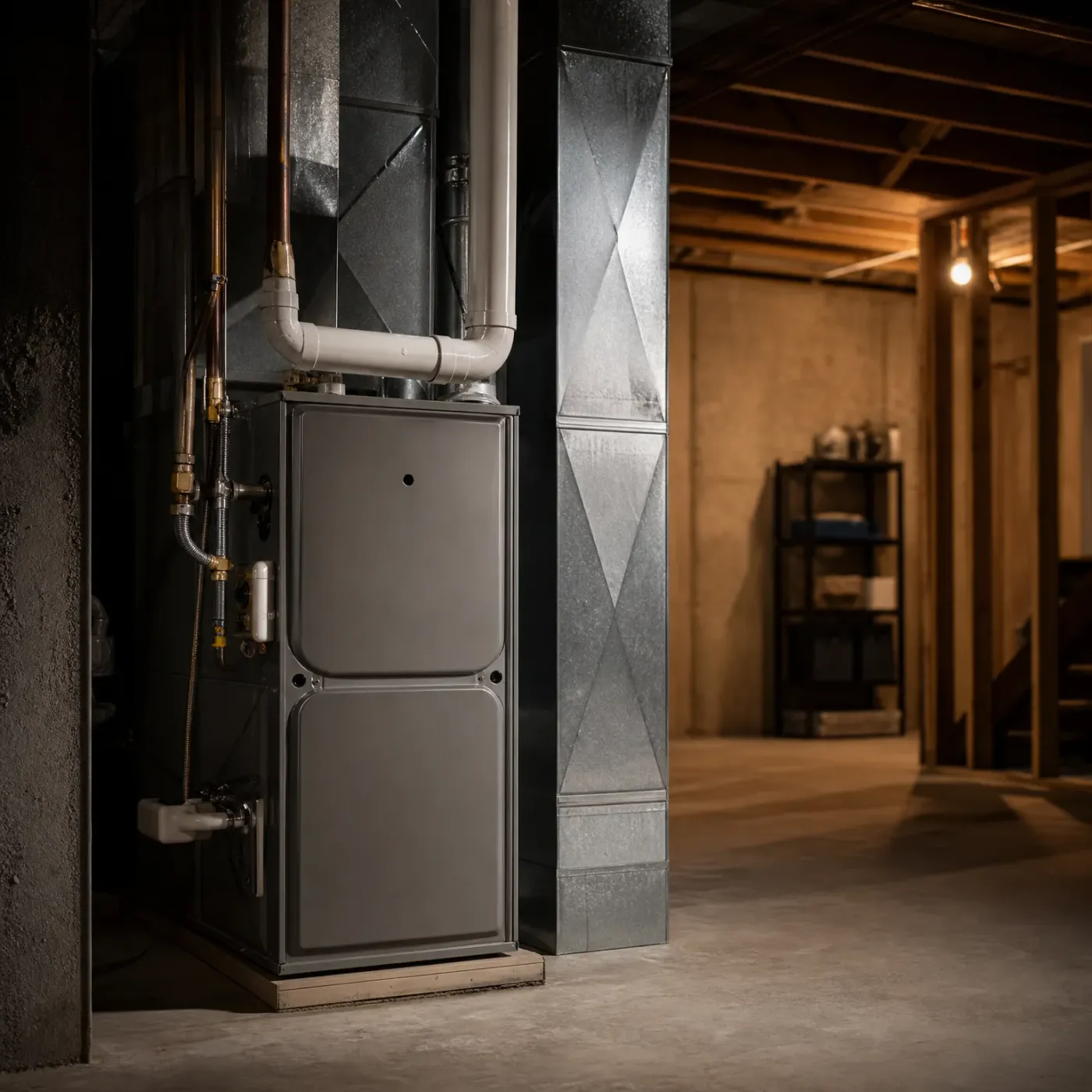
A gray gas furnace with copper and PVC piping stands beside large galvanized sheet-metal ductwork in an unfinished basement with concrete floor, wood framing, and a glowing bare bulb in the background.

Get the right pro for your furnace

What a furnace tune-up covers before a Montana winter

You want your furnace ready before the cold sets in, not failing in January. A tune-up covers things like the igniter, the flame sensor, the heat exchanger and the gas pressure, plus a check of airflow through your ducts. Send your details and a contractor who works on furnaces in your area will reach out to go over what yours needs.

Find a furnace pro

A furnace tune-up before winter means a contractor goes through the parts that let your furnace start reliably and run safely once you're depending on it every day. That includes checking the igniter and flame sensor, since those two are the most common reason a furnace won't fire up at all. It means testing the heat exchanger for cracks, because a cracked one can let exhaust gas leak into your house. It means checking gas pressure, so the burners get the right mix and don't run hotter or weaker than they should. It also means checking airflow through your ducts and swapping the filter if needed, since restricted airflow makes a furnace work harder and wears it down faster. Montana winters ask a lot of a furnace for months at a stretch. A tune-up done before that starts catches a weak part while it's a quick fix, not after it's left you without heat.

A gray high-efficiency furnace stands on a concrete basement floor beside sheet-metal ductwork, with white PVC vent pipes and a black flexible line running up to exposed wood floor joists, next to a wood-framed post against a concrete wall.
A clean burn and a tight cabinet mean the furnace lights on the first try when it's 20 below outside.
A beige metal furnace with a louvered front panel stands on a concrete floor against a concrete wall, connected to galvanized sheet-metal ductwork and a metal pipe.
A cracked heat exchanger or a rusted flue can put carbon monoxide into the house instead of out the pipe.

A contractor starts at the manifold, checking gas pressure against the rating plate, because pressure that's off in either direction changes how clean the burners fire. The flame sensor comes out next for a light cleaning. A thin layer of oxidation builds up on it over time, and that's usually why a furnace fires up then quits a few seconds later. With a camera or a mirror, the heat exchanger gets checked for hairline cracks, since it sits sealed inside the cabinet where nobody would spot a problem otherwise. The inducer motor and blower wheel get looked over for dust and wear, because a blower wheel caked with dust can throw off airflow without tripping any warning. Static pressure gets measured in the ducts too, since too much resistance makes the furnace run hotter than it was built to handle, and that wears it out faster. Last comes the flue, checked for a solid connection and the right slope, which is what actually moves combustion gas out of the house instead of letting it drift back in.

What actually happens during a tune-up

  • A technician checks gas pressure at the manifold against the furnace's rating plate, since too low or too high changes how clean the burners fire.
  • The flame sensor gets cleaned with a light abrasive pad, since a film of oxidation on it is the usual reason a furnace shuts off a few seconds after ignition.
  • The heat exchanger gets inspected with a camera or a mirror for hairline cracks, since that part is sealed inside the cabinet where you'd never see it otherwise.
  • The inducer motor and blower wheel get checked for dust and wear, since a dirty blower wheel can throw off airflow without ever tripping a fault code.
  • Static pressure gets measured in the ductwork, since too much resistance makes the furnace run hotter than it was built to and shortens its life.
  • The flue and venting get checked for a solid connection and the right slope, since that's what carries combustion gas out of the house instead of back into it.
An older man with gray hair and a beard, wearing a dark coat dusted with snow, stands smiling in a doorway of a warmly lit home with a sofa, lamp and window visible behind him.
An older man with grey hair and a beard, wearing a dark coat dusted with snow, stands in a dimly lit entryway with a ceiling lamp, a side table with two shaded lamps, and a lit fireplace visible in a room beyond.
A bearded older man in a dark snow-dusted coat and scarf stands just inside a home's front door, with a lamp-lit room and snowy window visible behind him.
An older man with gray hair and a beard stands in a doorway of a home, wearing a dark coat dusted with snow, with a lit fireplace and lamp visible in the blurred room behind him.

A pro who works on furnaces

Send the request and finding a pro stops being your problem.

No charge to send it. You decide if you hire them.

Why this gets checked before winter

A furnace that sits idle since April builds up dust on the burners and in the blower compartment over those months. That dust affects how clean the burners light and how much air the blower can move once the furnace starts running every day in the cold. Running it for the first time in October without a look at those parts means finding out what shape they're in at the same time you're relying on them. A tune-up puts that check before the first cold night instead of during it.

What a skipped check costs you later

A furnace that misfires or short-cycles because of a dirty flame sensor or a clogged filter works harder to hold the same temperature. Power here is cheap, but a furnace straining against restricted airflow still runs longer than it should to heat the house. Montana winters run long, and a furnace doing that from November through March adds up. A problem caught in September is a cleaning. The same problem found in January, with the system down and the house cold, is an emergency call.

An older beige furnace with louvered front panels stands on a concrete basement floor beside galvanized ductwork, metal and plastic pipes, exposed wood framing, and a cylindrical water heater at right.
Before you get your furnace maintenance
A gray high-efficiency furnace in a basement with PVC vent pipes, sheet-metal ductwork, copper and insulated pipes, a water heater at left, and an unfinished wood-stud wall at right.
After you get your furnace maintenance
  1. The technician shuts off gas and power before opening the cabinet.

  2. The burners and blower compartment get cleared of dust and debris.

  3. The heat exchanger is inspected for cracks or rust damage.

  4. Gas pressure at the manifold is tested against the rating plate.

Winter nights average 15°F statewide

Once those December nights settle into the teens, your furnace is running for hours at a stretch to hold the house steady. That's a lot of hours on an igniter and a blower that sat untouched since spring, so it's worth knowing they're clean and firing right before the cold locks in.

NOAA nClimDiv 1991-2020 county normals weighted by homes

What a tune-up settles before winter

  • A tune-up checks the parts that decide whether your furnace lights reliably and burns clean once it's running every day.
  • The igniter, the flame sensor, and gas pressure at the manifold cover most of why a furnace fails to start.
  • A cracked heat exchanger or a blocked flue is a safety problem, not a comfort one, and it gets caught during the inspection.
  • Dust from four or five months of sitting idle affects both the burners and how much air the blower can move.
  • None of this shows up as a problem until a cold night makes your furnace run for hours at a stretch.
  • A contractor working through these steps in October means fewer surprises once Montana winter settles in.

A furnace tune-up is a short list of specific checks, not a general once-over. The igniter and flame sensor get cleaned because a film of residue on either one is the usual reason a furnace won't light. Gas pressure gets measured at the manifold and matched against the rating plate, since too much or too little changes how the burners fire. The heat exchanger and flue get inspected because a crack or a blockage there puts carbon monoxide in the house instead of outside, and that's not something you'd notice on your own. The burners and blower compartment get cleared of the dust that settled in since the furnace last ran back in spring, since that dust affects both how clean the burners light and how much air the blower can push through your ducts.

None of these are problems you'd catch from the thermostat. A furnace can start every morning in October and still have an igniter on its way out or pressure that's drifted off spec. It's only once the nights settle into the teens and the furnace is running for hours at a stretch that any of this turns into a failure, usually at the worst possible time.

That's the case for having it looked at before winter rather than after it starts. The furnace that gets checked in October is the one that just keeps running in January, without you having to think about it.

A woman wrapped in a thick cream knit blanket sits in an armchair beside a lit table lamp, with an open book in the foreground and a frost-covered window behind her.
A woman in a cream knit sweater sits in an armchair with her eyes closed and head tilted back, beside a window showing orange autumn foliage and a wooden side table with a mug.

Furnace Maintenance

Get your furnace to the right pro

After this form, you can stop searching for a furnace pro.

A smartphone with a blank green screen stands upright against a plain light gray background.
Step 1 of 3: Equipment