

Signs your furnace won't last a Montana winter

Send the request today and let a furnace pro reach out to you.

Let a pro reach out

A furnace that short cycles, runs cold air before shutting off, or can't hold a room above 65 when it's near zero outside is telling you it won't make it through a Montana winter without a breakdown. Montana cold is not forgiving. A furnace that struggles in November on a mild night will fail outright when it has to run for hours straight at twenty below, because the parts under the most strain, the igniter, the heat exchanger, the blower motor, are already working harder than they should. Listen for banging or screeching when it starts up, watch for a yellow flame instead of blue, and check if your gas bill has jumped without a change in how you use it. Any one of those means something inside is wearing out. Caught now, before January, it's a repair. Left alone, it's a furnace that quits on the coldest night of the year, with no heat and no time to find someone who can get to you fast.

A gray high-efficiency furnace stands on a concrete basement floor beside galvanized sheet-metal ductwork, with white PVC vent pipes, gas and water lines, and unfinished wood framing behind it.

Running the way it should

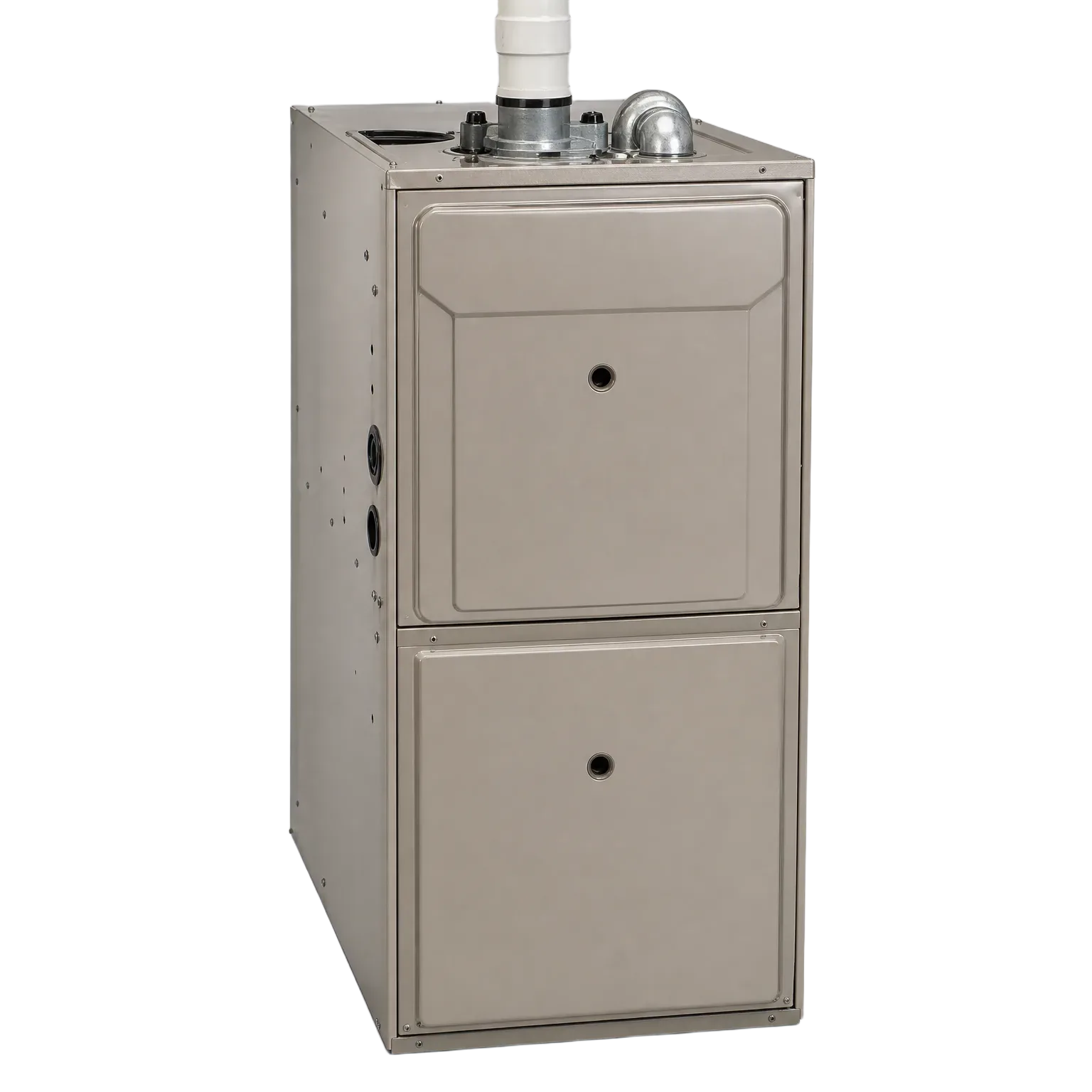
The burners light on the first try, the blower kicks in, and warm air keeps coming until the thermostat is satisfied. The flame behind the sight glass burns steady and blue. No rattling from the cabinet, no smell of exhaust near the flue pipe. It holds whatever temperature you set it to, even when it's well below zero outside.


A beige furnace with two louvered front panels stands on a concrete basement floor beside galvanized ductwork, metal pipes, and a wooden post.

Signs it's losing the fight

The burners hesitate or click several times before catching. The blower runs but the air coming out feels barely warm. You notice the house creeping down a degree or two below what the thermostat is set to, and it never quite catches back up. Short cycles, longer runtimes, a furnace working harder for less heat.

A closed silver laptop and a glazed ceramic mug on a wooden table, with a blurred kitchen counter, potted plant, cutting board and window in the background.

What a dying furnace costs you in January

A furnace that's already struggling in October doesn't fix itself by December. The same short cycling you notice now turns into a dead blower motor on the night it drops below zero, usually a Friday, usually with family in from out of town. You lose heat in a house built to hold it against real cold, and a space heater in the living room doesn't cover the bedrooms down the hall.

The part that eats your evening isn't the repair itself. It's finding someone who can look at it this week, not three weeks out, and then telling the story over again to the second and third company because the first one quoted something that didn't sit right. Send one form and that search is off your plate. You still wait for the work. You just stop doing the legwork of finding who'll do it.

Interior corner of a living room with a beige upholstered sofa and dark cushion in the foreground, a ceramic vase of leafy branches on a dark side table by a curtained window, a framed picture on the wall, and a wood-surround fireplace at right.
A gray high-efficiency furnace in a basement with white PVC vent pipes, sheet-metal ductwork, copper and black piping, a condensate pump, and insulated walls above a concrete floor.

What a furnace built for this still looks like

The ductwork is tight and the gas lines run clean to the burners. A condensate pump sits ready beside the unit because high-efficiency furnaces make water they need to drain. Nothing about it looks like it's fighting to keep up.

A beige residential furnace stands on a concrete basement floor beside galvanized sheet-metal ductwork, a round flue pipe, copper gas piping, and a PVC condensate line, with a wood-paneled wall at right.

What age looks like in the basement

Copper and iron pipe instead of the flexible lines newer units use. A round metal flue climbing to a stone-faced chimney, the way furnaces vented before PVC drains took over. Light grime on the panels tells you nobody's opened this unit in a while.

How do I know if my furnace is about to go out?

You keep an ear out for the furnace because you know what a breakdown costs you in January. The hard part is telling the difference between a noise that means nothing and one that means the heat exchanger is about to crack. Most furnaces don't quit all at once. They give you a sequence of warnings first, and the order they show up in tells you how much time you actually have.

The warnings come in a order, and the last one means stop waiting

It usually starts small. The burners take two or three tries to light instead of one. Then the blower runs longer each cycle to make the same heat. Then you hear a rattle from the cabinet when it kicks on, usually the heat exchanger expanding as it warms. The last stage is the one that matters most: a yellow flame instead of blue, or soot around the burner compartment. That means the gas isn't burning clean, and it can mean exhaust isn't venting the way it should. At minus ten outside, a furnace already at that stage doesn't have much left to give. That's the point to get it looked at, not wait for it to quit.

A woman in a dark gray sweater reclines on a couch with her eyes closed and a knit blanket over her lap, an open book resting face-down in front of her, with a lit table lamp and shelving blurred in the background.
A bearded man in a dark navy sweater over a collared shirt smiles and looks off to the side while seated at a dinner table with a glass of red wine, a lit candle, and a plate of food in the foreground of a dimly lit room.

Finding a pro stops being your job

Skip searching for a furnace pro and answer a few questions instead.

You only hire the pro if you want to.

A furnace loses efficiency as its heat exchanger ages, so it burns more gas to hold the same temperature, and that shows up on the bill before it shows up as a breakdown.

If your gas bill is climbing through a winter that isn't any colder than last year's, the furnace is working harder to do the same job, and that's usually the part that gives out first.

Winter nights average 15°F statewide

At 15 below zero on an average January night, your furnace can't just limp along, it has to run for hours straight to keep the house above 65. A unit that's already weak gives out under that kind of load, not on a mild evening.

NOAA nClimDiv 1991-2020 county normals weighted by homes

A gray high-efficiency furnace stands on a concrete basement floor beside galvanized sheet-metal ductwork, white PVC vent pipes, copper and black piping, and unfinished wood stud framing.
The burners light, the blower pushes air up through that ductwork without hesitation, and the gas lines stay dry and tight against the block wall.
A gray furnace with two access panels stands on a concrete basement floor beside sheet-metal ductwork, with pipes, flexible conduit and an electrical box on the concrete wall to the left.
Same basement, but the panels have been pulled more than once this year and the fasteners are starting to strip from it.
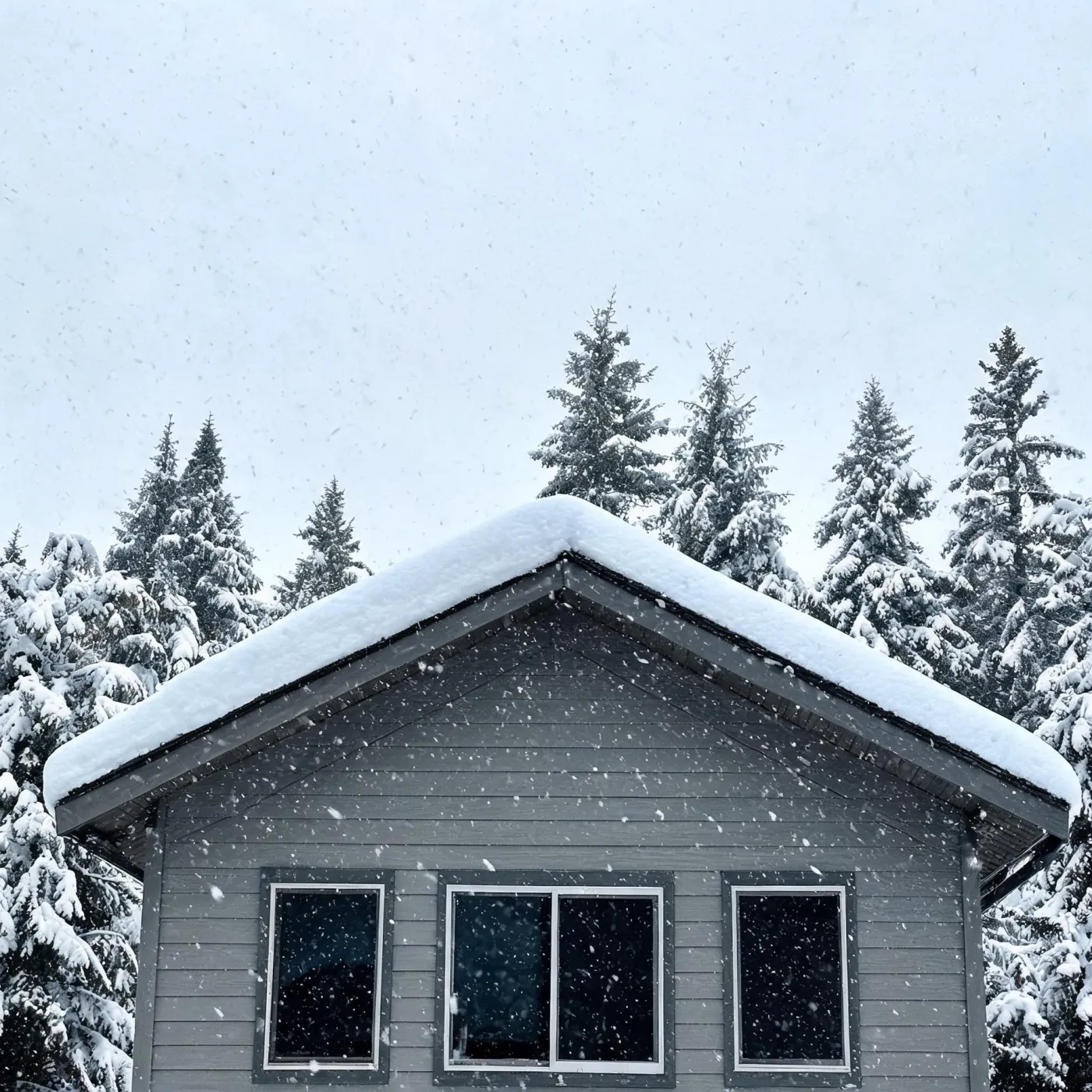
Gable end of a gray horizontal-siding house with three dark windows, its roof covered in thick snow, surrounded by snow-laden conifers under a pale sky with falling snowflakes.

Statewide, winter nights average 15°F, according to NOAA climate data. That's the stretch your furnace has to answer for, hour after hour, long after the house has gone quiet. A furnace in good shape holds steady through nights like that without you giving it a thought. One that's falling behind starts showing it there first: the air coming out of the vents feels cooler than it should, rooms farthest from the furnace lag behind the thermostat setting, and the unit runs longer stretches just to keep up. By morning you notice the thermostat says 68 but the house feels colder than that.

NOAA nClimDiv 1991-2020 county normals weighted by homes

A beige gas furnace with a metal flue pipe stands in a basement against concrete block walls, beside sheet-metal ductwork, copper and white plastic pipes, and a water heater at right.
Before you get your furnace repair
A gray high-efficiency furnace with white PVC vent pipes stands beside sheet-metal ductwork and a water heater in an unfinished basement with concrete walls and wood framing.
After you get your furnace repair

Where your furnace stands

  • Short cycling, cold blasts of air, or a house that won't hold 65 near zero all point to the same thing: a furnace that won't finish the winter.
  • A climbing gas bill on a winter no colder than last year's means the heat exchanger is already losing efficiency.
  • Rattling cabinets, pulled panels, or fasteners that won't hold straight are signs of a unit that's been opened up and worked on more than once.
  • Montana nights average 15°F statewide, and that load finds the weak point in a furnace that's already struggling.
  • A furnace that limps through October doesn't recover by December, it just breaks down later and colder.
  • A furnace running the way it should lights on the first try and keeps a steady blue flame with no smell of exhaust nearby.

The signs add up to one question: can this furnace hold your house through a night at 15 below, or will it quit on you. Short cycling and cold air blowing before the burners settle in are the furnace telling you now, while it's October and nothing's urgent yet. A gas bill climbing on a winter that isn't any colder than last year's says the heat exchanger is already working harder for the same heat, and that wear doesn't reverse itself. A cabinet that's been opened more than once, with fasteners that won't thread straight anymore, has a history, and that history matters more once the real cold sets in. None of this gets easier by waiting. A furnace that struggles in October is carrying the same weakness into December, just colder and with less room for error. Montana winters run at an average of 15°F, and that's not a mild ask. It's hours of straight running, night after night, and a furnace that's already weak gives out under that kind of load rather than a gentle one. A furnace in good shape doesn't show any of this. It lights the first time, every time, holds a steady blue flame, and keeps the house at temperature without you noticing it's working. If what you've read here sounds like your furnace, that's the answer: it's not going to make it through this winter on its own, and waiting for the coldest night to find out is the expensive way to learn it.

A smiling man in a dark navy sweater sits on a light sofa in a living room, with a glass bowl of popcorn on a wooden coffee table and bookshelves behind him.
A smiling man in a dark green sweater sits on a tan leather sofa in a dimly lit living room, with a bowl of popcorn in the foreground and a kitchen area blurred behind him.
A smiling middle-aged man in a dark shirt sits on a gray sofa in a living room, with a bowl of popcorn on a side table and shelves, a window and kitchen area behind him.
A smiling bearded man in a dark gray t-shirt sits on a gray couch in a living room, with a large glass bowl of popcorn on a wooden table in the foreground.

Furnace Repair

Let someone else find the pro

One form replaces the calls you'd make to find a furnace pro.

A black smartphone standing upright against a plain light gray background, its screen filled with solid green.
Step 1 of 3: Equipment